Simple Omelette
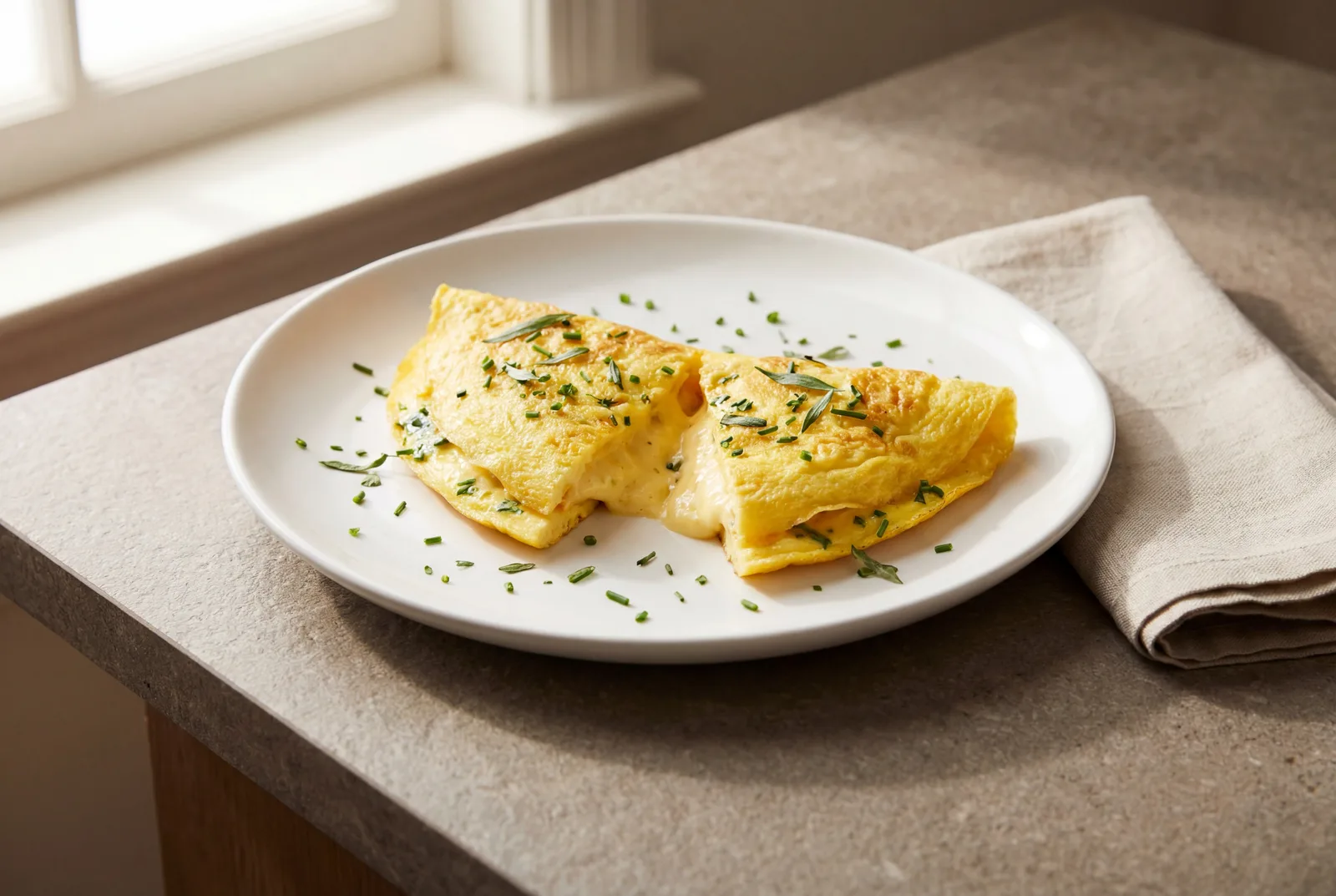
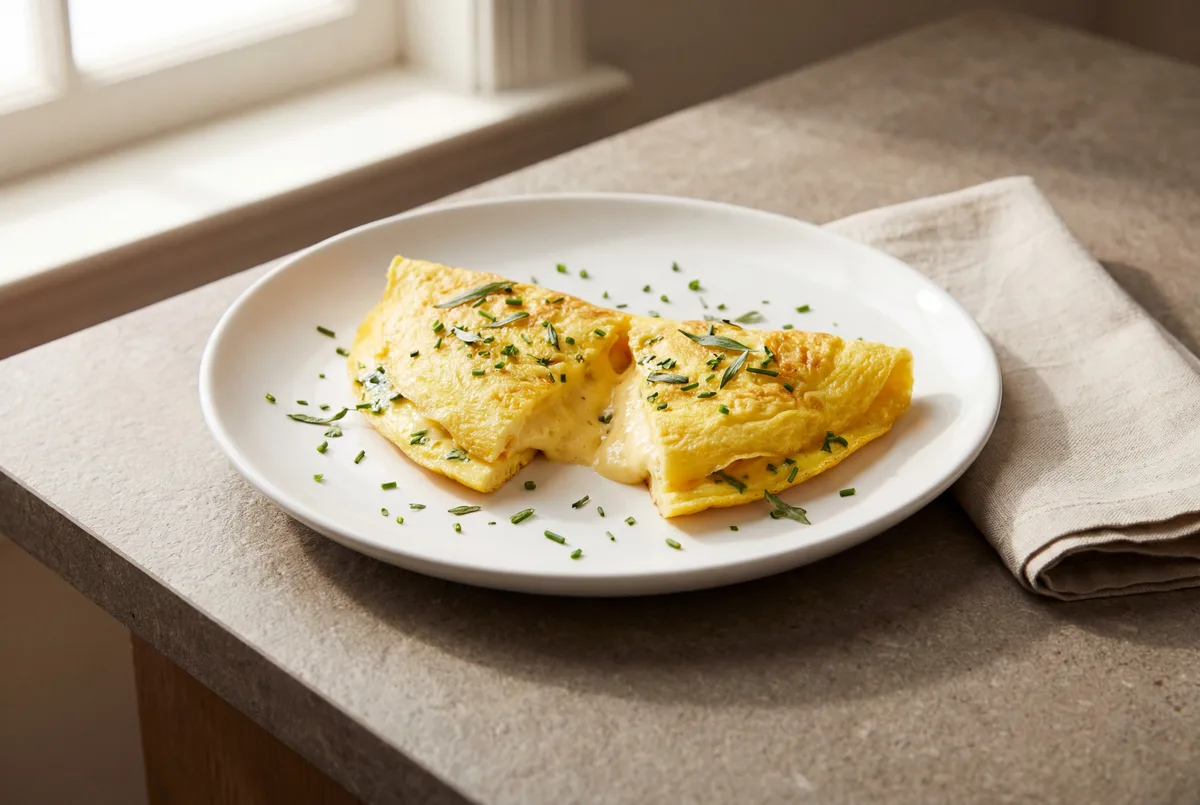
Soft, pale French omelette with a creamy interior and barely-set eggs. Zero fiber, 18g of protein, and one of the most digestible breakfasts for IBD patients. Research suggests egg proteins may support intestinal barrier function. Ready in 10 minutes.
Simple Omelette
Soft, pale French omelette with a creamy interior and barely-set eggs. Zero fiber, 18g of protein, and one of the most digestible breakfasts for IBD patients. Research suggests egg proteins may support intestinal barrier function. Ready in 10 minutes.
Ingredients
- Low FODMAP
- Low FODMAP
- Low FODMAP
- Low FODMAP
Optional Fillings
Choose one or two if tolerated:
Ingredients
- Low FODMAP
- Low FODMAP
- Low FODMAP
Instructions
Crack the eggs into a medium bowl, add salt and white pepper (if using), and beat with a fork for about 30 seconds until the yolks and whites are fully combined and no streaks remain.
Equipment: medium bowl, forkHeat an 8-inch nonstick skillet over medium heat for about 1 minute, until warm to the touch.
Equipment: 8-inch nonstick skilletTip: The pan should feel warm, not hot, when you hold your hand 2 inches above itAdd the butter and swirl to coat the entire pan bottom, tilting as needed.
When the butter foams and the bubbles just begin to subside (about 20 seconds), pour in the beaten eggs. They should sizzle gently.
Tip: The eggs should sizzle gently on contact—aggressive sizzling means the pan is too hotLet the eggs sit completely undisturbed for 10 seconds, until the edges just begin to turn opaque.
Using a silicone spatula, gently push the set edges toward the center in slow, sweeping motions, tilting the pan to let the uncooked egg flow to the edges.
Equipment: silicone spatulaContinue this gentle pushing motion for about 1-2 minutes, until the eggs are just set but still glossy and slightly wet on top.
Tip: The omelette is done when the eggs are just set but still glossy and slightly wet on top—they'll continue cooking from residual heatIf using a filling, sprinkle it over one half of the omelette now.
Tilt the pan and use your spatula to fold the omelette in half, then slide it gently onto a warm plate.
Serve immediately while the interior is still creamy.
Notes
Storage
Best eaten immediately. Refrigerate leftovers in an airtight container for up to 1 day, though texture becomes rubbery when reheated. Microwave on 50% power for 20-30 seconds if needed.
Heat control
Medium heat is essential—too hot and the eggs turn rubbery and brown, too low and they steam instead of gently set. A pale, soft French omelette should have no browning.
Dairy-free option
Replace butter with olive oil or avocado oil. The flavor changes slightly, but the texture stays silky. Both oils are equally gentle on the gut and completely lactose-free.
Fillings during flares
Keep it plain or add only aged cheddar cheese, which is low in lactose and SCD-legal. Avoid vegetables, even cooked ones, until symptoms improve.
French vs. American style
This recipe creates a pale, soft French omelette. For a browned American-style omelette, use medium-high heat and don't fold until fully set.
Scaling
This technique works best for 1-2 servings. For more people, make multiple omelettes rather than one large one—they cook more evenly in a smaller pan.
IBD Considerations
Diet Protocol Compliance
How this recipe fits common IBD dietary approaches