Banana Rice Porridge
Silky white rice porridge with mashed banana. At just 1.5g fiber per serving, this gentle breakfast stays well within low-residue targets for active flares.
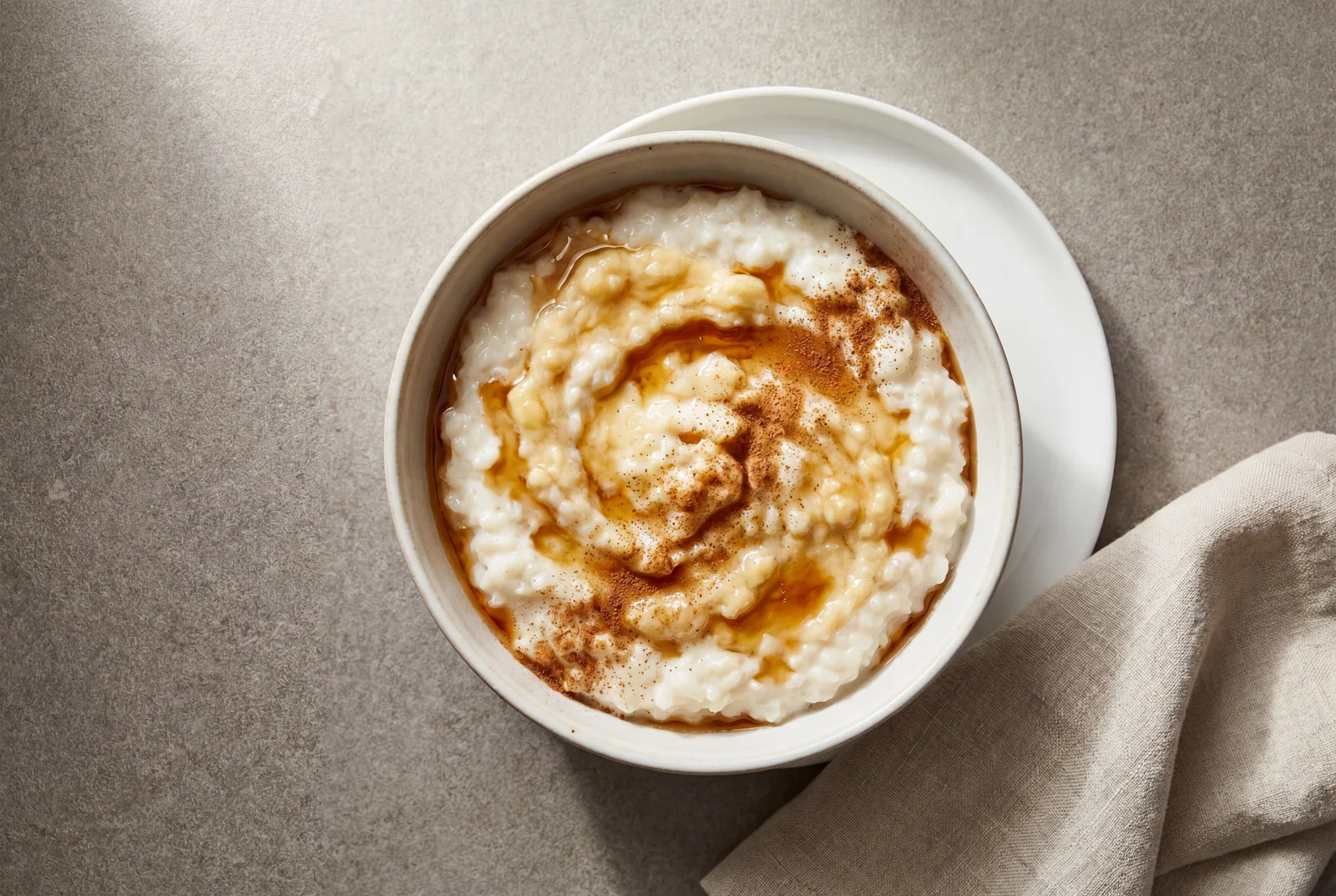
Banana Rice Porridge
Silky white rice porridge with mashed banana. At just 1.5g fiber per serving, this gentle breakfast stays well within low-residue targets for active flares.
Ingredients
- Low FODMAP
- Low FODMAP
- Low FODMAP
- Low FODMAP
- Low FODMAP
- Low FODMAP
Instructions
Rinse the rice in a fine-mesh strainer until the water runs clear.
Equipment: fine-mesh strainerCombine the rice and water in a small saucepan and bring to a boil over medium-high heat.
medium-high heatEquipment: small saucepanOnce boiling, reduce heat to low, cover with a lid, and simmer for 15-18 minutes, until the rice is very soft and has absorbed most of the water.
low heatTip: Don't lift the lid during cooking - steam needs to stay trapped for proper textureStir occasionally during cooking, adding 2-4 tablespoons more water if needed.
Tip: Add 2-4 tablespoons more water if the porridge looks too thick - consistency should be creamy, not stickyRemove from heat and stir in the mashed banana until fully incorporated and the mixture is creamy.
Add maple syrup and cinnamon if using, stirring to combine.
Divide between two bowls and serve warm.
Tip: The porridge will thicken as it cools - this is normal
Notes
Storage
Best eaten fresh while warm. Refrigerate leftovers in an airtight container for up to 2 days. Add 2-3 tablespoons water or lactose-free milk when reheating to restore the creamy texture.
Banana ripeness matters
Use firm yellow bananas without brown spots. As bananas ripen and develop spots, their fructan content increases and they transition from low-FODMAP to higher-FODMAP, which may cause digestive discomfort during flares.
Honey substitution
If using honey instead of maple syrup, note that honey is only low-FODMAP at 1 teaspoon (7g) per Monash. One tablespoon exceeds the threshold. Maple syrup is a safer choice - low-FODMAP up to 2 tablespoons.
Protein boost
Stir in 1 scoop of plain collagen peptides or unflavored whey protein isolate after cooking for an extra 15-20g protein without changing texture or flavor. This can help with healing during recovery.
Dairy option for remission
Replace half or all of the water with lactose-free milk for a richer, creamier porridge with more protein and calcium. This works well during remission when you can handle slightly richer foods - may be too heavy during active flares.
Make ahead
Cook the rice porridge base the night before and refrigerate. In the morning, reheat with a splash of water, then stir in fresh mashed banana.
SCD alternative
White rice is not permitted on the Specific Carbohydrate Diet. Substitute with well-cooked, mashed butternut squash or cauliflower rice, though neither provides the same gentle, binding quality that many of us find helpful during diarrhea-predominant flares.
IBD Considerations
Diet Protocol Compliance
How this recipe fits common IBD dietary approaches