Breakfast Miso Soup with Tofu
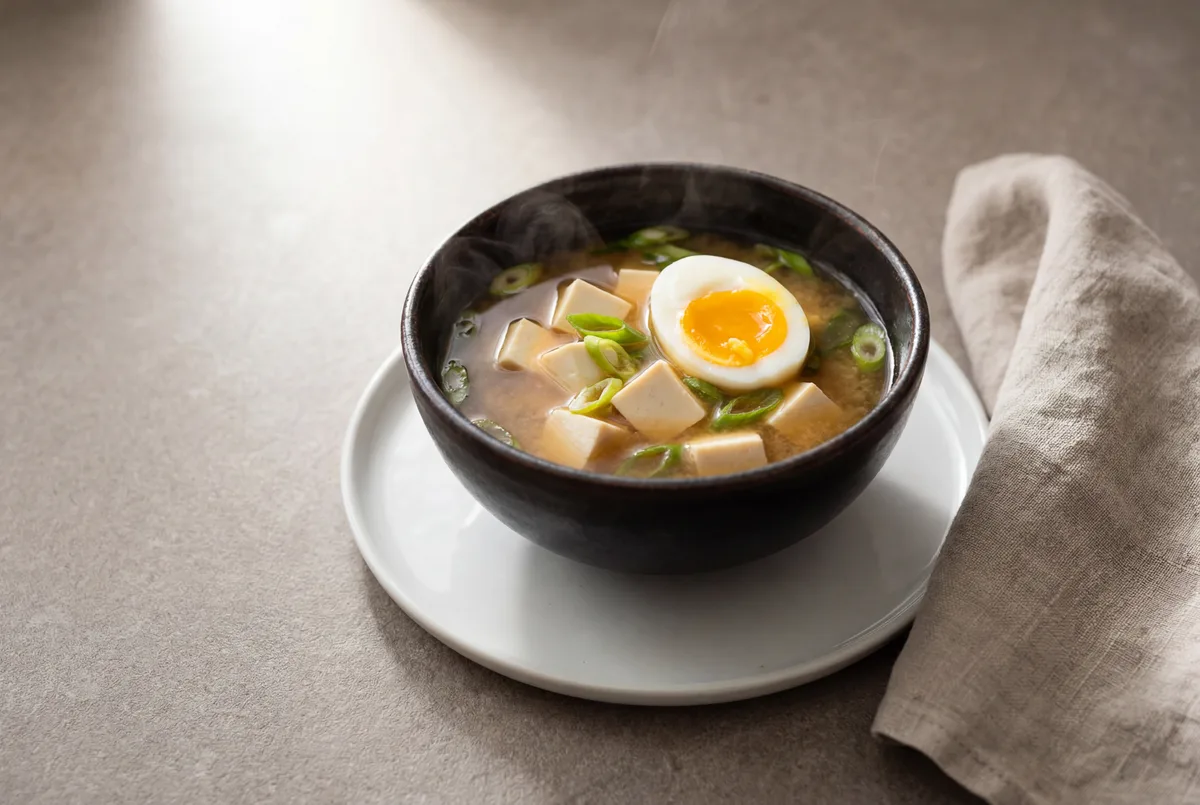
Umami-rich miso broth with silken tofu and tender carrot ribbons. This traditional Japanese breakfast delivers probiotic benefits from fermented miso with just 2g fiber—gentle enough for many of us during active flares.
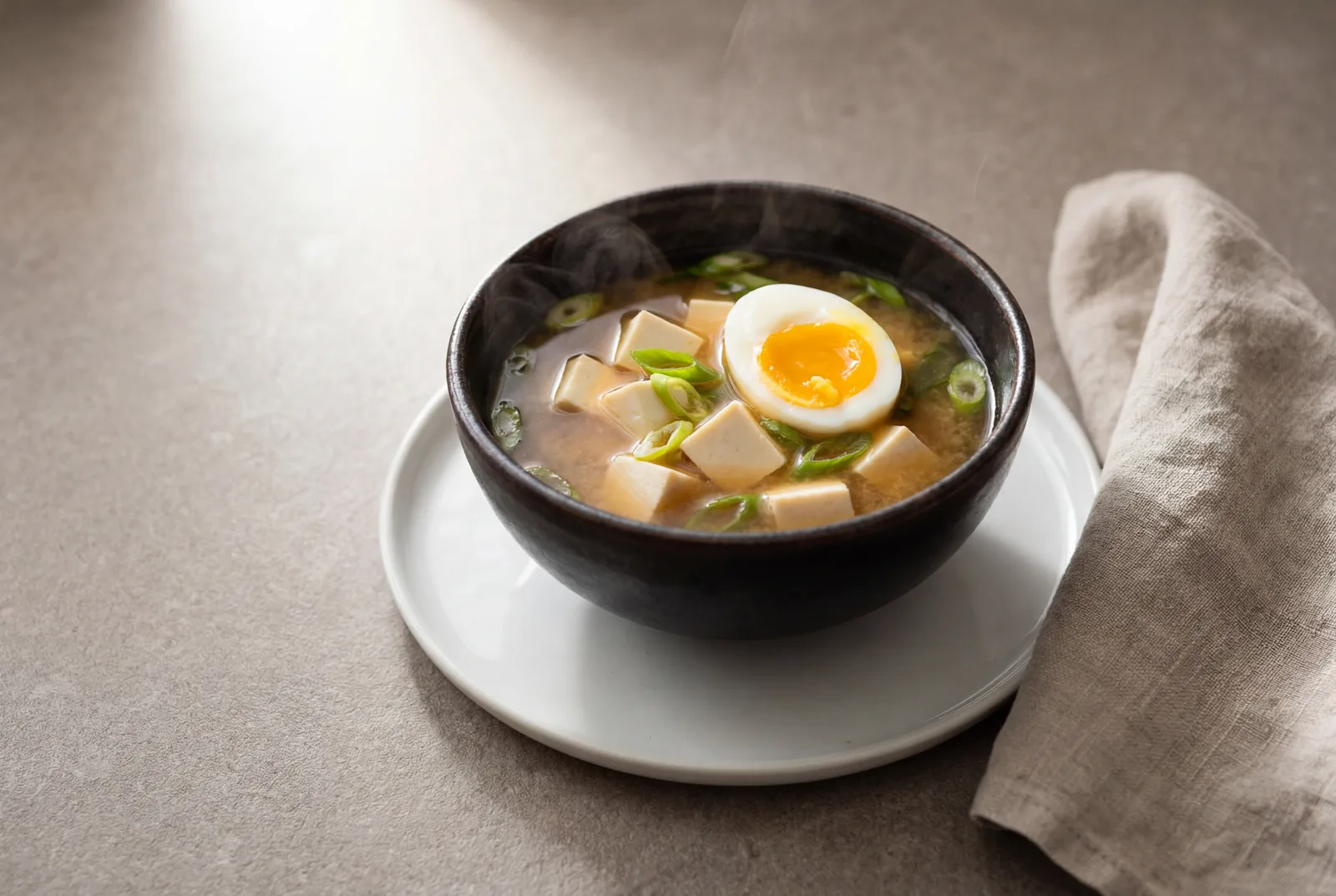
Breakfast Miso Soup with Tofu
Umami-rich miso broth with silken tofu and tender carrot ribbons. This traditional Japanese breakfast delivers probiotic benefits from fermented miso with just 2g fiber—gentle enough for many of us during active flares.
Ingredients
- Low FODMAP
- Low FODMAP
- Moderate FODMAP
- Low FODMAP
- Low FODMAP
- Low FODMAP
- Low FODMAP
Instructions
Bring 4 cups water to a gentle simmer in a medium pot over medium heat. Small bubbles should just break the surface.
Equipment: medium potAdd the carrot slices and cook for 5 minutes, until tender enough to pierce easily with a fork but still holding their shape.
Reduce heat to low. The water should no longer bubble actively.
Tip: Miso's beneficial probiotics die above 160°F (71°C). Keep the heat low to preserve them.Place the miso paste in a small bowl. Ladle about 1/4 cup of the warm cooking water into the miso.
Equipment: small bowl, whiskWhisk vigorously until the miso dissolves completely into a smooth, thin liquid with no lumps.
Pour the miso mixture back into the pot, stirring gently to distribute evenly throughout the broth.
Add the tofu cubes gently—they should float and bob in the broth.
Tip: Use a spoon to slide the tofu in gently. Silken tofu breaks apart easily.Let the soup warm through for 2 minutes without simmering, just until the tofu is heated but the broth stays below a boil.
Tip: Do not let the soup return to a boil. Keep it just below simmering temperature.Remove from heat immediately.
Ladle the soup into serving bowls, distributing the tofu and carrot evenly.
Equipment: ladle, serving bowlsTop each bowl with sliced green onions, a small drizzle of sesame oil, and half a soft-boiled egg if using.
Notes
Storage
Refrigerate in an airtight container for up to 3 days. The tofu will absorb more miso flavor as it sits. Reheat gently over low heat without boiling—microwaving at 50% power works well for individual portions.
Never boil miso
Temperatures above 160°F (71°C) kill the beneficial probiotic bacteria and can make miso bitter. Always add miso after removing from heat or on very low heat.
Miso varieties
White miso (shiro) is the mildest and sweetest—best for IBD. Red miso (aka) is saltier and more intense; if using red, reduce to 2 tablespoons.
Gluten-free miso
Traditional miso may contain barley. Look for rice-based (kome) miso or chickpea miso for certified gluten-free options.
Firm tofu alternative
Firm tofu is lower FODMAP than silken (green up to 170g vs. 39g for silken). Dice firm tofu smaller since it won't break apart in the broth. Texture will be firmer but still delicious.
Serve with rice
Pair with a small bowl of white rice for a complete, sustaining breakfast that stays under 5g fiber total.
IBD Considerations
Diet Protocol Compliance
How this recipe fits common IBD dietary approaches