Creamy Polenta with Poached Egg
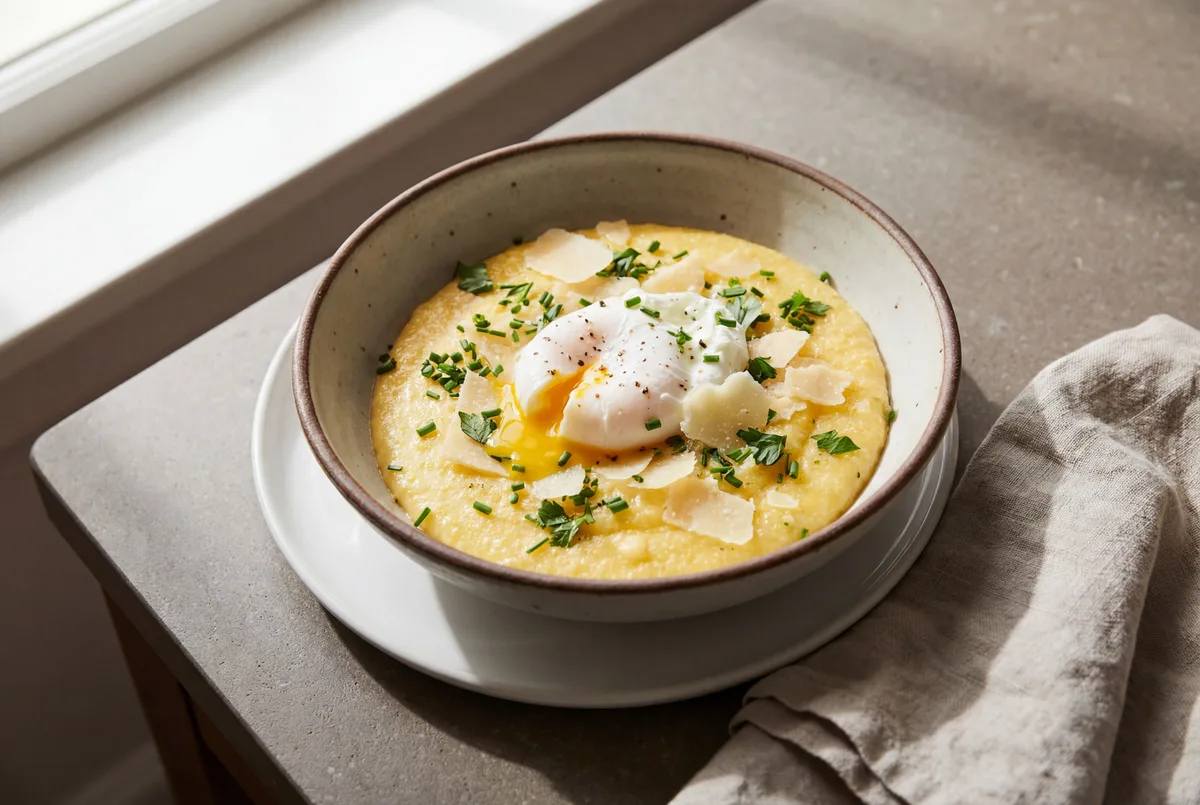
Creamy golden polenta crowned with a runny-yolked poached egg. The soft, spoonable texture makes this a comforting flare-friendly breakfast with just 2g of fiber and 12g of protein.
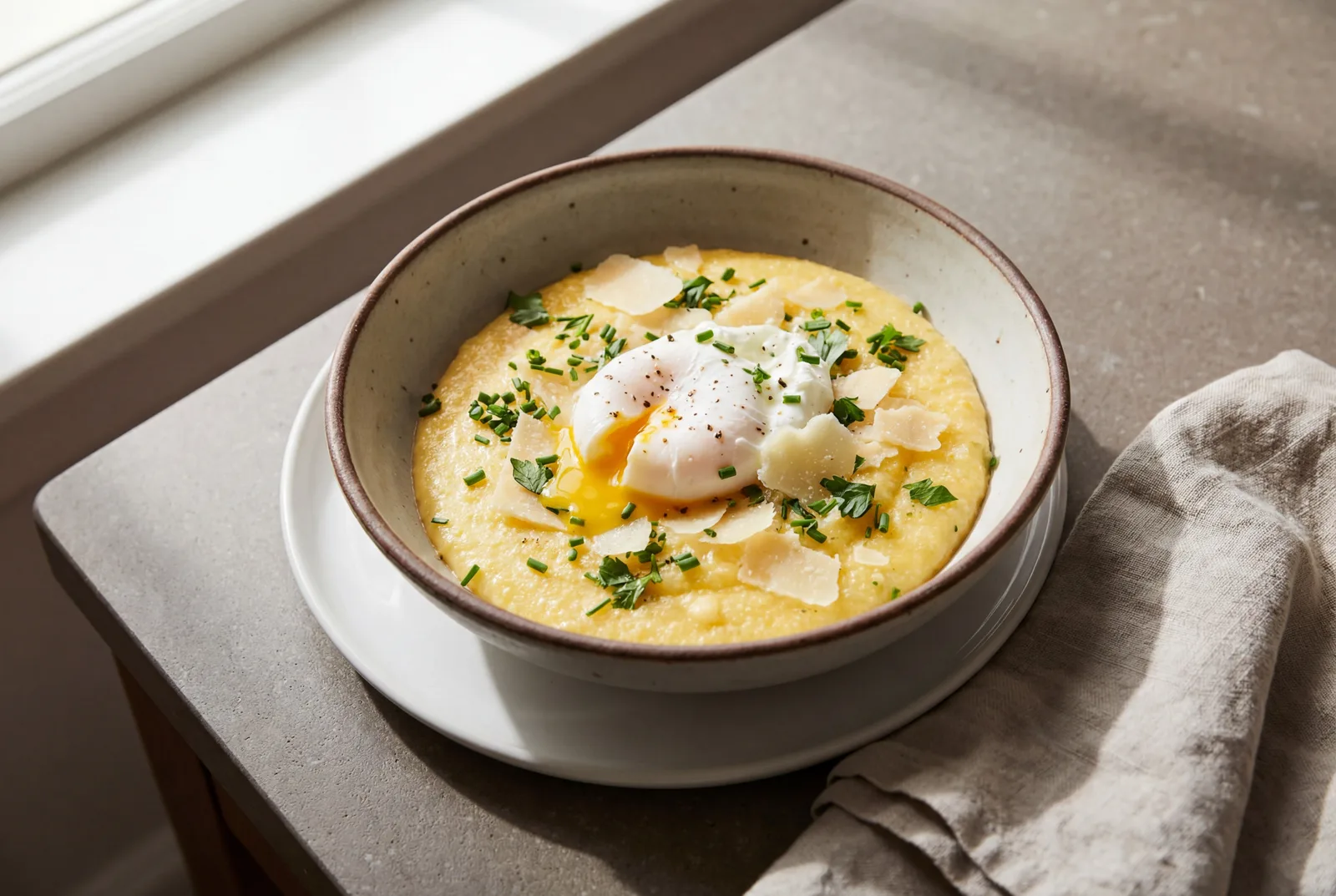
Creamy Polenta with Poached Egg
Creamy golden polenta crowned with a runny-yolked poached egg. The soft, spoonable texture makes this a comforting flare-friendly breakfast with just 2g of fiber and 12g of protein.
Ingredients
- Low FODMAP
- Low FODMAP
- Low FODMAP
- Low FODMAP
- Low FODMAP
- Low FODMAP
- Low FODMAP
- Low FODMAP
- Low FODMAP
- Low FODMAP
Polenta
Poached Eggs
Instructions
Bring water and salt to a rolling boil in a medium saucepan over high heat.
Equipment: medium saucepanReduce heat to medium and slowly pour in polenta in a thin, steady stream while whisking constantly to prevent lumps.
Equipment: whiskTip: Whisking constantly prevents lumps—this is the critical moment for smooth polentaLower heat to low and cook, stirring frequently with a wooden spoon, for 20-25 minutes until the polenta thickens and pulls away from the sides of the pan when stirred.
Equipment: wooden spoonTip: Stir every few minutes to prevent sticking. The polenta is done when it pulls away from the sides of the panThe polenta is done when it has a smooth, creamy consistency and no longer feels gritty on your tongue.
Remove from heat and stir in butter and Parmesan until fully melted and incorporated, creating a glossy, silky texture.
Fill a medium saucepan with 3 inches of water and add the vinegar.
Equipment: medium saucepanBring to a gentle simmer over medium heat—small bubbles should rise but not break the surface vigorously.
Tip: Small bubbles should rise but not break the surface vigorously—this gentle movement keeps the egg intactCrack each egg into a separate small cup or ramekin.
Equipment: small cups, ramekinsStir the simmering water in one direction to create a gentle whirlpool.
Tip: The swirling motion helps the whites wrap around the yolk for a compact shapeCarefully slide one egg into the center of the whirlpool—the swirling motion helps the whites wrap around the yolk.
Cook for 3-4 minutes for soft, runny yolks, or 5 minutes for firmer yolks—the whites should be set and opaque.
Tip: For firmer yolks, cook 5 minutes. The whites should be set and opaqueRemove with a slotted spoon, letting excess water drain back into the pan.
Equipment: slotted spoonDivide the warm polenta evenly between two shallow bowls.
Create a small well in the center of each portion and gently nestle a poached egg into it.
Season with a pinch of salt and freshly ground black pepper (if using), then garnish with snipped fresh chives.
Polenta
Poached Eggs
Assembly
Notes
Storage
Refrigerate leftover polenta and eggs separately in airtight containers for up to 3 days. Polenta will firm up when chilled—reheat with a splash of water or broth, stirring over low heat until creamy again. Poached eggs are best enjoyed fresh but can be reheated in simmering water for 30-60 seconds.
Polenta varieties
Traditional coarse-ground polenta has the best texture and flavor but requires the full 20-25 minute cook time. Instant polenta cooks in 5 minutes but yields a less creamy, slightly grainy result. For IBD purposes, both are low-FODMAP and equally digestible.
Dairy-free option
Replace butter with extra virgin olive oil and omit the Parmesan. The polenta will still be creamy and rich. Nutritional yeast can add a savory, cheesy flavor without dairy.
Egg freshness
Fresh eggs (less than a week old) hold together best when poaching. Older eggs have thinner whites that spread more in the water, creating wispy edges.
Leftover transformation
Spread leftover polenta in a parchment-lined baking dish, chill until firm (at least 2 hours), then cut into squares or triangles. Pan-fry in olive oil until golden and crispy for polenta fries or croutons.
IBD Considerations
Diet Protocol Compliance
How this recipe fits common IBD dietary approaches