Matcha Overnight Oats
Bright green overnight oats with earthy matcha and gentle sweetness. The soluble fiber in oats may support beneficial gut bacteria during stable remission—no cooking required.
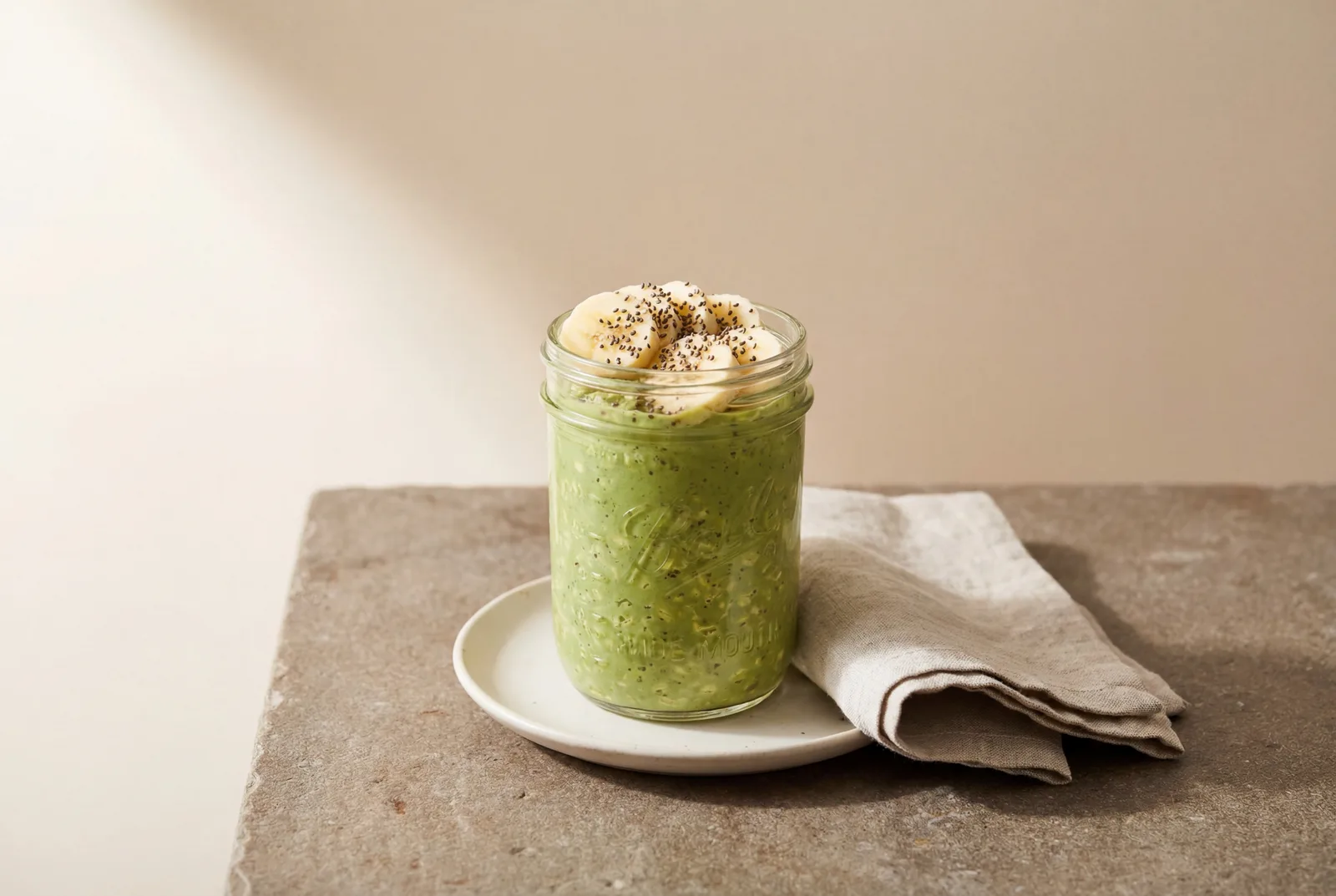
Matcha Overnight Oats
Bright green overnight oats with earthy matcha and gentle sweetness. The soluble fiber in oats may support beneficial gut bacteria during stable remission—no cooking required.
Ingredients
- Low FODMAP
- Low FODMAP
- Low FODMAP
- Low FODMAP
- Low FODMAP
- Low FODMAP
Instructions
Sift the matcha powder into a jar or container using a fine-mesh strainer to break up any clumps. The powder should look smooth and evenly green.
Equipment: fine-mesh strainer, jar or containerAdd a small splash of almond milk (about 2 tablespoons) and whisk vigorously until the matcha completely dissolves and no green specks remain. This prevents clumps in the final oats.
Equipment: fork, small whiskTip: A small bamboo whisk (chasen) works best, but a fork is fineAdd the oats, remaining milk, maple syrup, and chia seeds if using. The mixture should look soupy at this stage.
Stir well for 30 seconds to ensure the oats are fully submerged and the matcha is evenly distributed throughout.
Tip: Proper stirring ensures even matcha distribution and prevents dry pocketsCover tightly with a lid or plastic wrap and refrigerate for at least 8 hours (overnight is ideal). The oats will absorb the liquid and become thick and creamy.
In the morning, give the oats a good stir. They will have thickened significantly. Add 2-4 tablespoons more milk if desired.
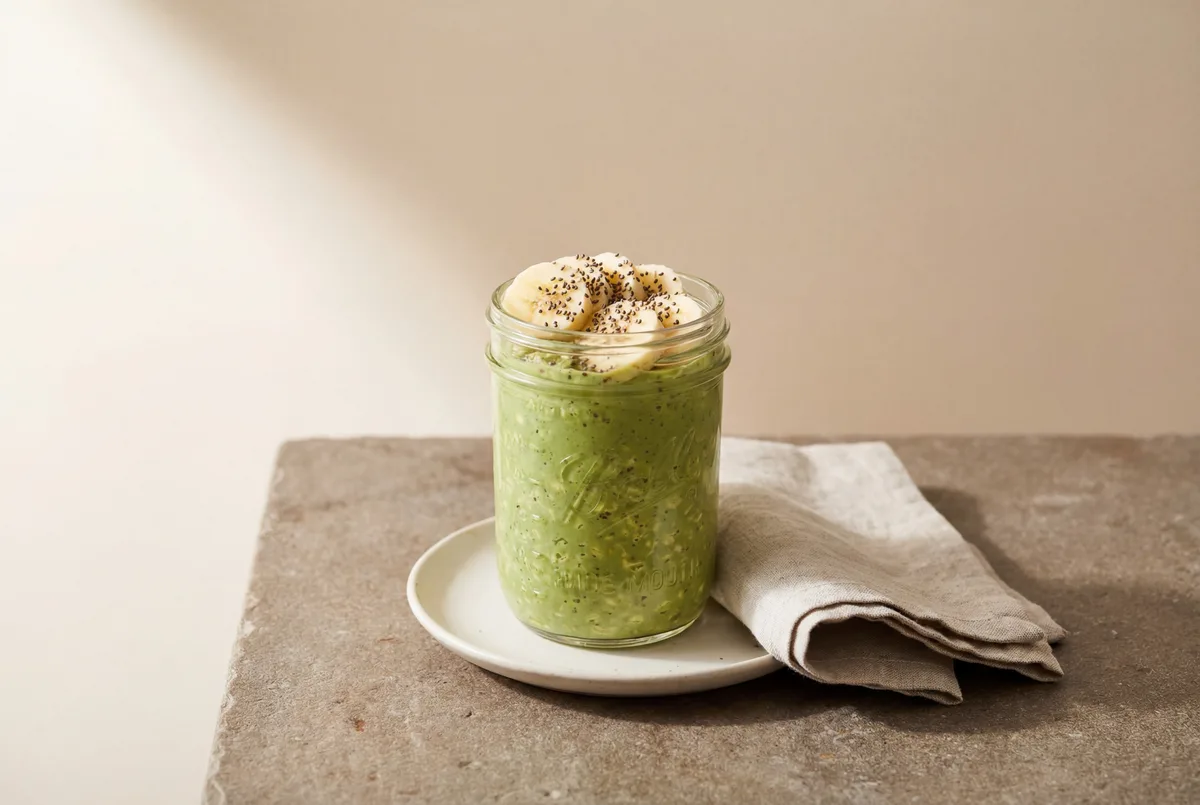
Tip: Add more milk if you prefer a looser consistencyTop with banana slices arranged in a fan pattern, or substitute with low-FODMAP berries if preferred.
Serve cold for the traditional overnight oats experience, or microwave for 1-2 minutes if you prefer warm oatmeal. Stir halfway through heating to ensure even warmth.
Tip: Heating is optional—many prefer overnight oats cold
Notes
Storage
Refrigerate in an airtight container for up to 3 days. The oats will continue to thicken over time, so add a splash of milk when ready to eat.
Matcha quality
Use culinary-grade matcha for the best flavor and vibrant green color. Ceremonial-grade works but is expensive for cooking. Avoid matcha blends with added sugar.
Skip chia for lower fiber
Chia seeds add texture and omega-3s but also contribute 3g of fiber per tablespoon. Omit them if you're aiming for closer to 5g total fiber or if you find seeds irritating.
Dairy-free options
This recipe uses almond milk, but oat milk (watch portion for FODMAP), coconut milk, or lactose-free dairy milk all create a creamy texture.
Banana substitution
Swap sliced banana for low-FODMAP berries like strawberries (up to 140g) or blueberries (up to 40g) to stay compliant.
Soaking time
The full 8-hour soak is critical for soft, creamy oats. Anything less than 4 hours leaves the oats too chewy and harder to digest.
IBD Considerations
Diet Protocol Compliance
How this recipe fits common IBD dietary approaches