Tuscan White Bean Chicken
Tender chicken in a creamy Parmesan sauce with white beans and spinach. A one-pan Mediterranean dinner delivering 38g protein per serving, built for stable remission with careful FODMAP management.
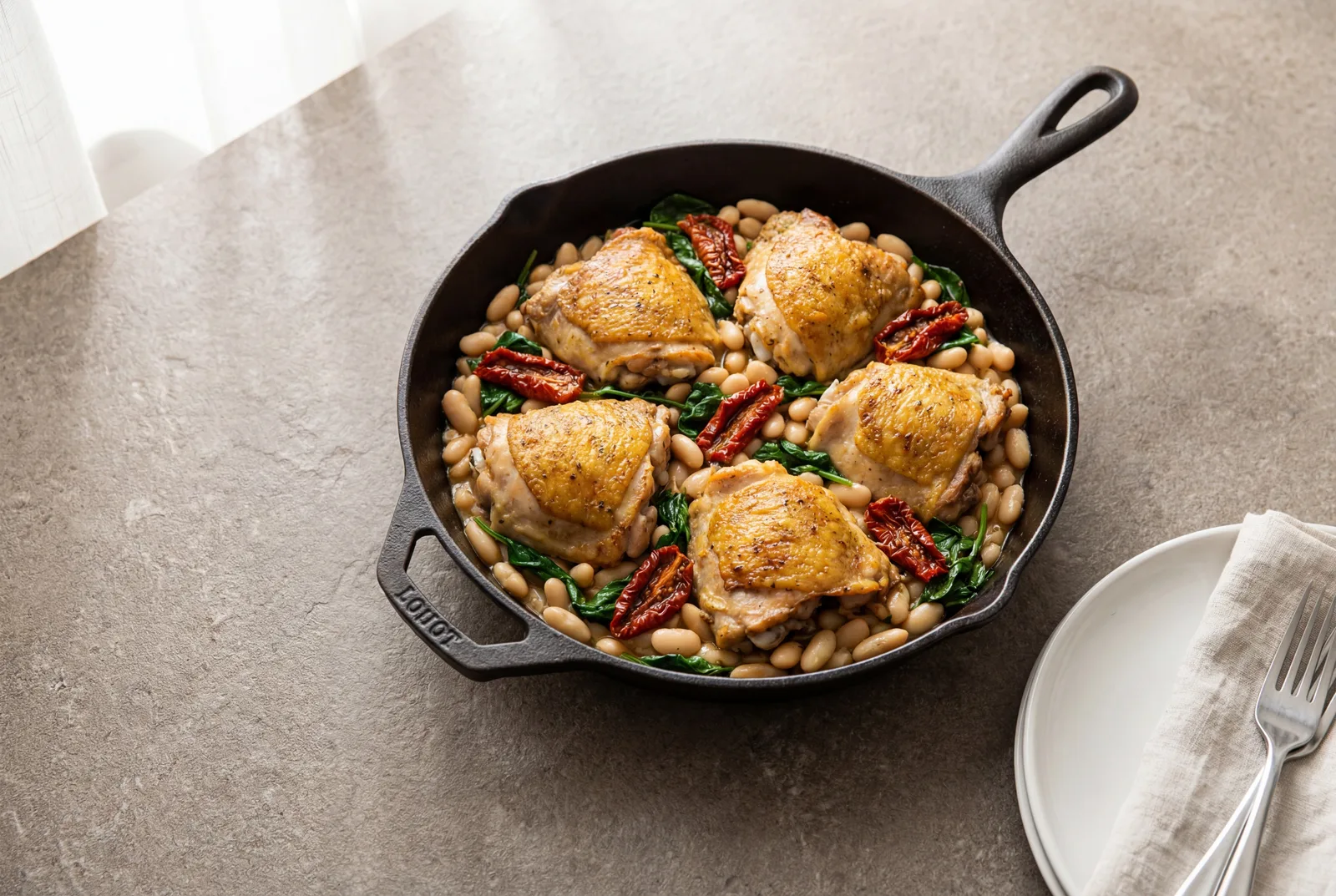
Tuscan White Bean Chicken
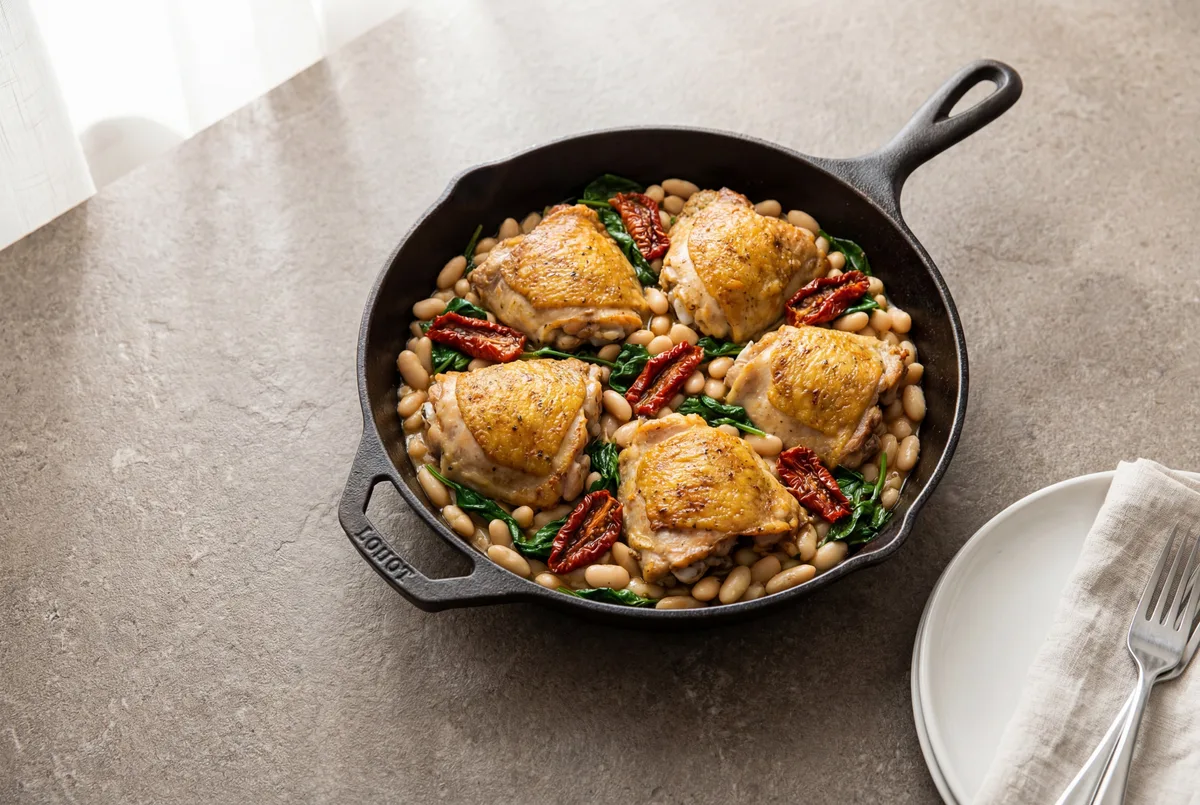
Tender chicken in a creamy Parmesan sauce with white beans and spinach. A one-pan Mediterranean dinner delivering 38g protein per serving, built for stable remission with careful FODMAP management.
Ingredients
- Low FODMAP
- Low FODMAP
- Low FODMAP
- Moderate FODMAP
- Low FODMAP
- Low FODMAP
- Moderate FODMAP
- Moderate FODMAP
- Low FODMAP
- Low FODMAP
- Low FODMAP
- Low FODMAP
- Low FODMAP
Chicken
Sauce
Instructions
Pat chicken breasts dry with paper towels. Season both sides with salt, pepper (if using), and Italian seasoning.
Equipment: paper towelsHeat olive oil in a large skillet (12-inch) over medium-high heat until shimmering, about 2 minutes.
Equipment: 12-inch skilletAdd chicken to the skillet. Cook 6-7 minutes per side without moving, until deep golden-brown and cooked through to 165°F (74°C) at the thickest part.
165°F (74°C)Tip: Don't move the chicken while searing - let it develop a golden crust before flippingTransfer chicken to a clean plate and tent loosely with foil to keep warm.
Equipment: foilReduce heat to medium. Add garlic-infused oil to the same skillet, swirling to coat the bottom.
Add sun-dried tomatoes (if using). Cook 1 minute, stirring constantly, until fragrant.
Add drained and rinsed beans along with chicken broth. Bring to a simmer and cook 5 minutes, stirring occasionally, until slightly reduced.
Tip: The beans should be thoroughly drained and rinsed to minimize FODMAP contentPour in heavy cream. Bring to a gentle simmer and cook 2-3 minutes, until the sauce begins to thicken and coats the back of a spoon.
Add spinach in handfuls. Stir gently until just wilted but still bright green, about 1-2 minutes.
Remove skillet from heat. Stir in Parmesan cheese until melted and incorporated into the sauce.
Return chicken breasts to the skillet, nestling them into the sauce. Spoon sauce over the top.
Return to low heat. Simmer 2-3 minutes to warm the chicken through and let flavors meld.
Remove from heat. Taste and adjust salt if needed.
Garnish with torn fresh basil (if using). Serve immediately with sauce spooned over each portion.
Notes
Storage
Refrigerate in an airtight container for up to 3 days. Store chicken and sauce separately if possible to prevent the chicken from becoming soggy. Reheat gently in a covered skillet over low heat with a splash of broth.
Bean preparation is critical
Drain and rinse canned beans thoroughly under cold running water for at least 30 seconds. Research from Monash University shows this removes up to 40% of the FODMAPs (GOS oligosaccharides) that leach into the canning liquid. If beans are new to your diet, start with 1/4 cup portions.
Dairy-free option
Replace heavy cream with full-fat coconut cream for equally creamy results that are naturally lactose-free. Omit Parmesan or use a dairy-free aged cheese alternative. The coconut flavor is subtle and complements the Tuscan flavors well.
Sun-dried tomato caution
Oil-packed sun-dried tomatoes are softer and less concentrated than dry-packed varieties. If tomatoes trigger acid reflux or you have nightshade sensitivity, omit them entirely. The dish is still flavorful without them.
About garlic-infused oil
The fructans in garlic are water-soluble, not fat-soluble, so they don't transfer to the oil. This makes garlic-infused oil low-FODMAP and safe for most people. Store homemade versions in the refrigerator and use within 3-4 days to prevent botulism risk. Commercial versions are safer for longer storage.
Chicken thickness
If using thick chicken breasts (over 1 inch), pound them to even thickness or butterfly them. This ensures even cooking without drying out the thinner portions.
Serving suggestions
Serve over white rice, creamy polenta, or gluten-free pasta. For lower carbs, pair with roasted zucchini or mashed cauliflower. Each of these maintains the low-FODMAP profile when prepared without garlic or onion.
IBD Considerations
Diet Protocol Compliance
How this recipe fits common IBD dietary approaches