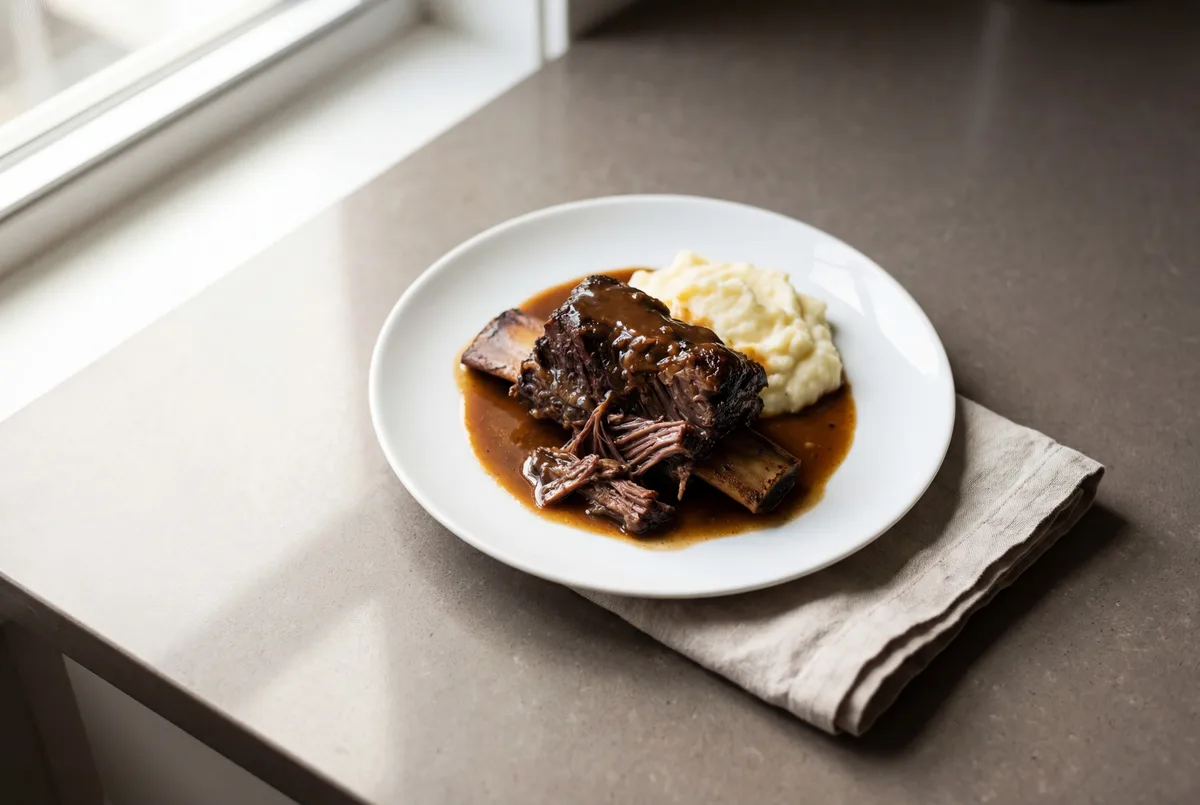
Braised Short Ribs
Tender beef short ribs braised low and slow until the meat falls from the bone. A special-occasion dish for stable remission only—the high fat content and red wine base make this too rich for flares or sensitive periods.
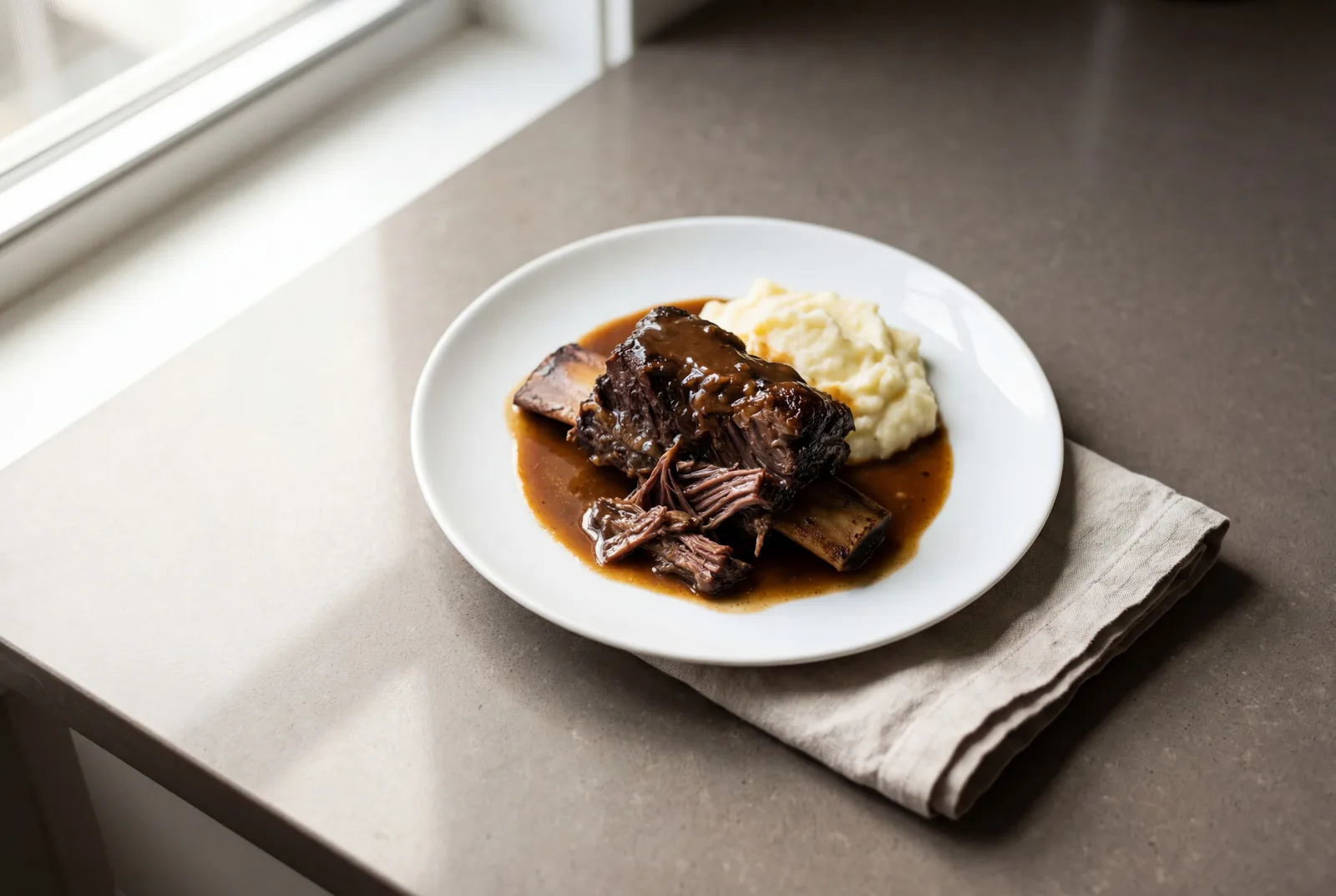
Braised Short Ribs
Tender beef short ribs braised low and slow until the meat falls from the bone. A special-occasion dish for stable remission only—the high fat content and red wine base make this too rich for flares or sensitive periods.
Ingredients
- Low FODMAP
- Low FODMAP
- Low FODMAP
- Low FODMAP
- Low FODMAP
- High FODMAP
- Low FODMAP
- Low FODMAP
- Moderate FODMAP
- Low FODMAP
- Low FODMAP
- Low FODMAP
Instructions
Preheat oven to 325°F (165°C).
325°F (165°C)Equipment: ovenPat short ribs dry with paper towels and season all sides generously with salt and pepper.
Equipment: paper towelsTip: Dry ribs are essential for a good sear—moisture creates steam instead of browningHeat garlic-infused oil in a large Dutch oven over medium-high heat until shimmering.
Equipment: Dutch ovenWorking in batches to avoid crowding, sear ribs for 3-4 minutes per side until a deep mahogany crust forms. Transfer to a plate.
Tip: Work in batches—crowding the pan creates steam instead of a crustReduce heat to medium. Add carrots and celery (if using) to the pot. Cook for 5 minutes, stirring occasionally, until edges begin to soften and brown slightly.
Add tomato paste and cook for 1 minute, stirring constantly, until it darkens and becomes fragrant.
Tip: Cooking tomato paste briefly deepens its flavor and reduces raw acidityPour in wine (or broth substitute), using a wooden spoon to scrape up all the caramelized bits from the bottom of the pot.
Equipment: wooden spoonLet wine simmer for 5 minutes until reduced by half and slightly thickened.
Add beef broth, thyme sprigs, and bay leaves. Stir to combine.
Return ribs to the pot, nestling them bone-side up in the braising liquid.
Tip: Bone-side up ensures the meat stays submerged in the braising liquidBring liquid to a gentle simmer, then cover pot with a tight-fitting lid.
Transfer to the oven and braise for 2.5-3 hours, until meat pulls away from the bone easily when prodded with a fork.
325°F (165°C)Tip: The meat should pull away from the bone easily when prodded with a forkRemove pot from oven. Carefully transfer ribs to a serving platter and tent with foil.
Equipment: serving platter, foilStrain braising liquid through a fine-mesh sieve, discarding solids. Let liquid rest for 5 minutes, then skim fat from the surface.
Equipment: fine-mesh sieveTip: For IBD: refrigerate sauce until fat solidifies on top, then remove completely before servingSpoon defatted sauce over ribs. Garnish with fresh parsley before serving.
Notes
Defatting is critical for IBD
This recipe produces 36g of fat per serving before defatting. For the gentlest experience, refrigerate the strained sauce until fat solidifies on top (several hours or overnight), then remove and discard the solid fat layer. This significantly reduces the fat load and makes the dish more tolerable.
Storage
Refrigerate in an airtight container for up to 3 days. The dish improves overnight as flavors meld. Cold storage makes defatting easier—solidified fat lifts right off.
Wine substitute
If avoiding alcohol entirely, replace wine with an equal amount of additional beef broth plus 2 tablespoons of red wine vinegar for acidity. The dish will be milder but still flavorful.
Celery sensitivity
This recipe uses 2 full celery stalks, which is high-FODMAP. If you're sensitive to mannitol or following strict low-FODMAP, omit celery entirely and increase carrots to 4.
Reheating
Warm gently on the stovetop over low heat or in a 300°F (150°C) oven for 20-30 minutes. Add a splash of broth if the sauce has thickened too much.
Bone-in advantage
Bones release collagen during the long braise, creating body in the sauce. Some evidence suggests gelatin may support gut barrier function, though more research is needed.
IBD Considerations
Diet Protocol Compliance
How this recipe fits common IBD dietary approaches