Thai Basil Chicken (Mild)
Silky chicken stir-fried with Thai basil and a savory-sweet sauce. No chilies, but all the aromatic punch of pad kra pao—ready in 25 minutes and gentle enough for remission. Garlic-infused oil delivers full flavor without the FODMAPs.
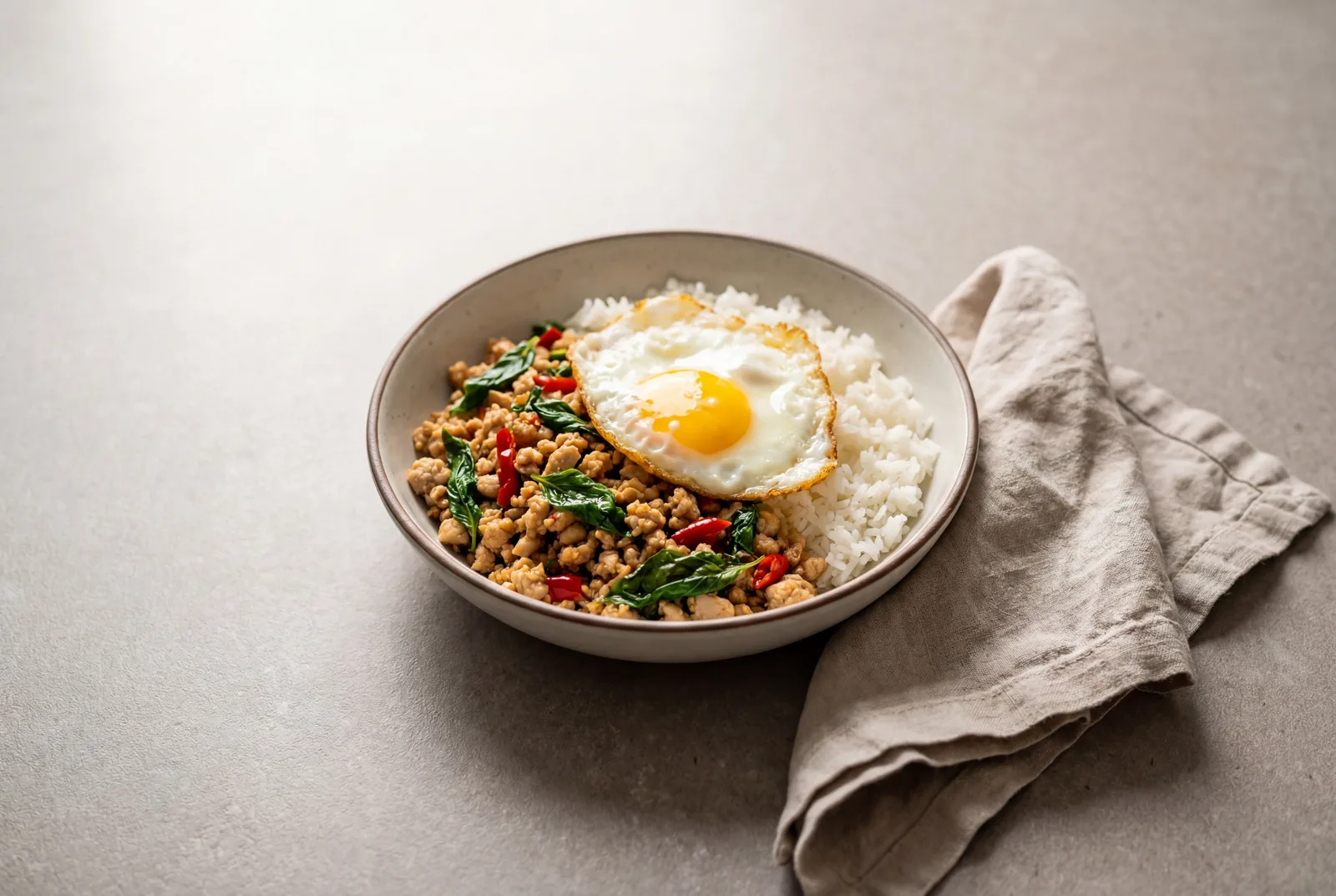
Thai Basil Chicken (Mild)
Silky chicken stir-fried with Thai basil and a savory-sweet sauce. No chilies, but all the aromatic punch of pad kra pao—ready in 25 minutes and gentle enough for remission. Garlic-infused oil delivers full flavor without the FODMAPs.
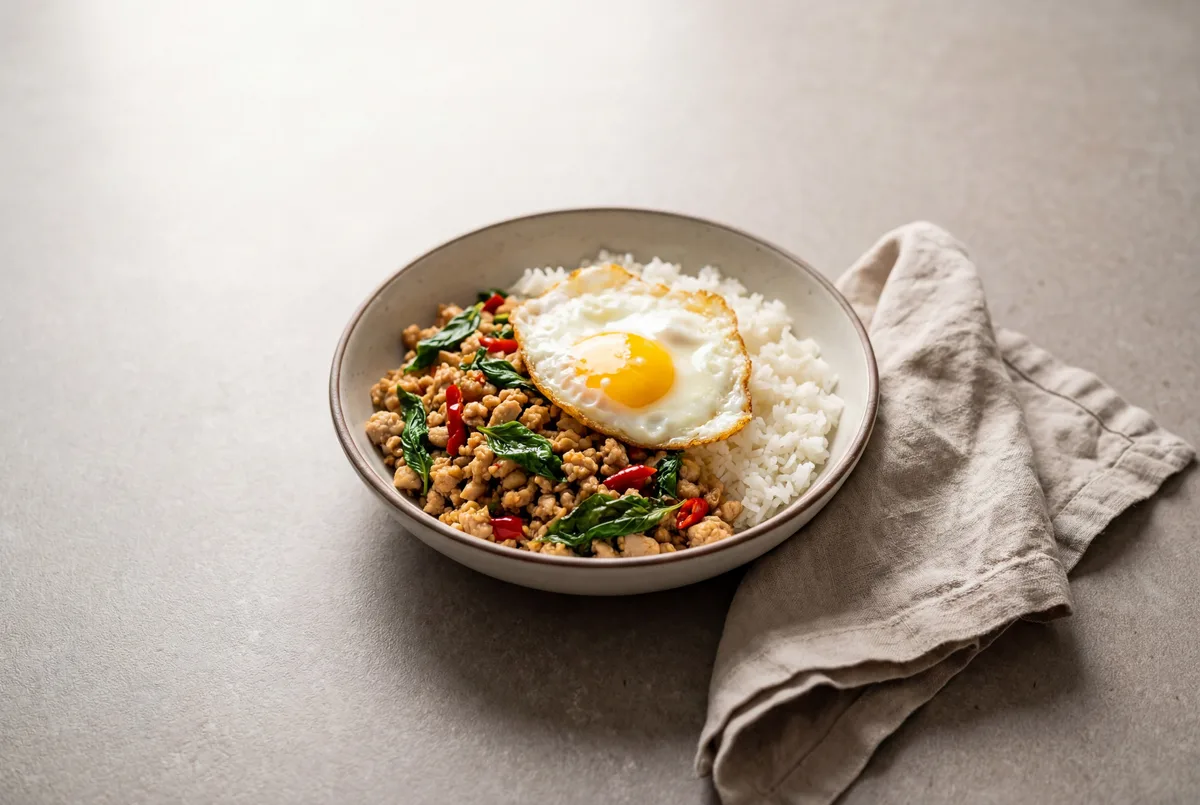
Ingredients
- Low FODMAP
- Low FODMAP
- Low FODMAP
- Low FODMAP
- Low FODMAP
- Low FODMAP
- Low FODMAP
- Low FODMAP
- Low FODMAP
- Low FODMAP
Instructions
Whisk together the tamari, fish sauce, maple syrup, and minced ginger in a small bowl. Set aside.
Equipment: small bowl, whiskHeat the garlic-infused oil in a wok or large skillet over high heat until shimmering—you should see wisps of smoke.
Equipment: wok, large skilletTip: High heat is essential for proper stir-fry texture and flavor developmentAdd the chicken in a single layer, allowing space between pieces for proper browning.
Tip: Crowding the pan drops temperature and steams instead of searsCook for 3-4 minutes without stirring, until the bottom is golden brown and the chicken releases easily from the pan.
Flip and cook for 2 more minutes, until the chicken is cooked through and no longer pink inside. Internal temperature should reach 165°F (74°C).
165°F (74°C)Add the bell pepper slices and stir-fry for 2 minutes, until softened but still slightly crisp.
Pour the sauce over the chicken and toss to coat evenly, cooking for 30-60 seconds until the sauce glazes the meat and reduces slightly.
Remove the pan from heat immediately. Add the fresh basil leaves and toss gently until they wilt from the residual heat, about 30 seconds.
Tip: Residual heat wilts the basil perfectly—direct heat would make it bitterTransfer to a serving dish and garnish with sliced green onion tops.
Serve immediately over warm jasmine rice.
Notes
Storage
Refrigerate in an airtight container for up to 3 days. Store rice separately if possible to prevent sogginess. Reheat gently in a skillet over medium heat, adding a splash of water or broth to prevent drying—avoid the microwave, which makes the basil turn dark.
Thai basil substitution
Thai basil has a distinct anise-licorice flavor that defines this dish. Regular Italian basil works in a pinch but tastes noticeably different—still delicious, just not authentic. Both are gentle on the gut and generally well-tolerated.
Fish sauce alternatives
If you're sensitive to fermented foods or high sodium, substitute with coconut aminos (1:1 ratio) or an additional tablespoon of tamari. You'll lose some umami depth, but the dish stays flavorful.
Bell pepper prep
Remove all seeds and white membrane before slicing—these parts contain more capsaicin and are tougher to digest. If bell peppers trigger symptoms, swap for well-cooked zucchini strips or omit entirely.
About garlic-infused oil
Fructans (the FODMAP in garlic) don't transfer to oil, making this low-FODMAP safe. Use certified low-FODMAP oil if possible, or make your own by heating olive oil with whole garlic cloves for 10-15 minutes, then discarding the solids.
Scaling
This recipe doubles easily. Cook chicken in two batches to maintain high heat and proper browning. Use a larger wok or work in batches.
IBD Considerations
Diet Protocol Compliance
How this recipe fits common IBD dietary approaches