Teriyaki Salmon
Pan-seared salmon with a glossy teriyaki glaze that caramelizes at the edges. Each serving delivers approximately 1.5-2g of anti-inflammatory omega-3 fatty acids. A low-FODMAP sauce you can make in under 30 minutes—perfect for stable remission when you want bold flavors without the gut stress.
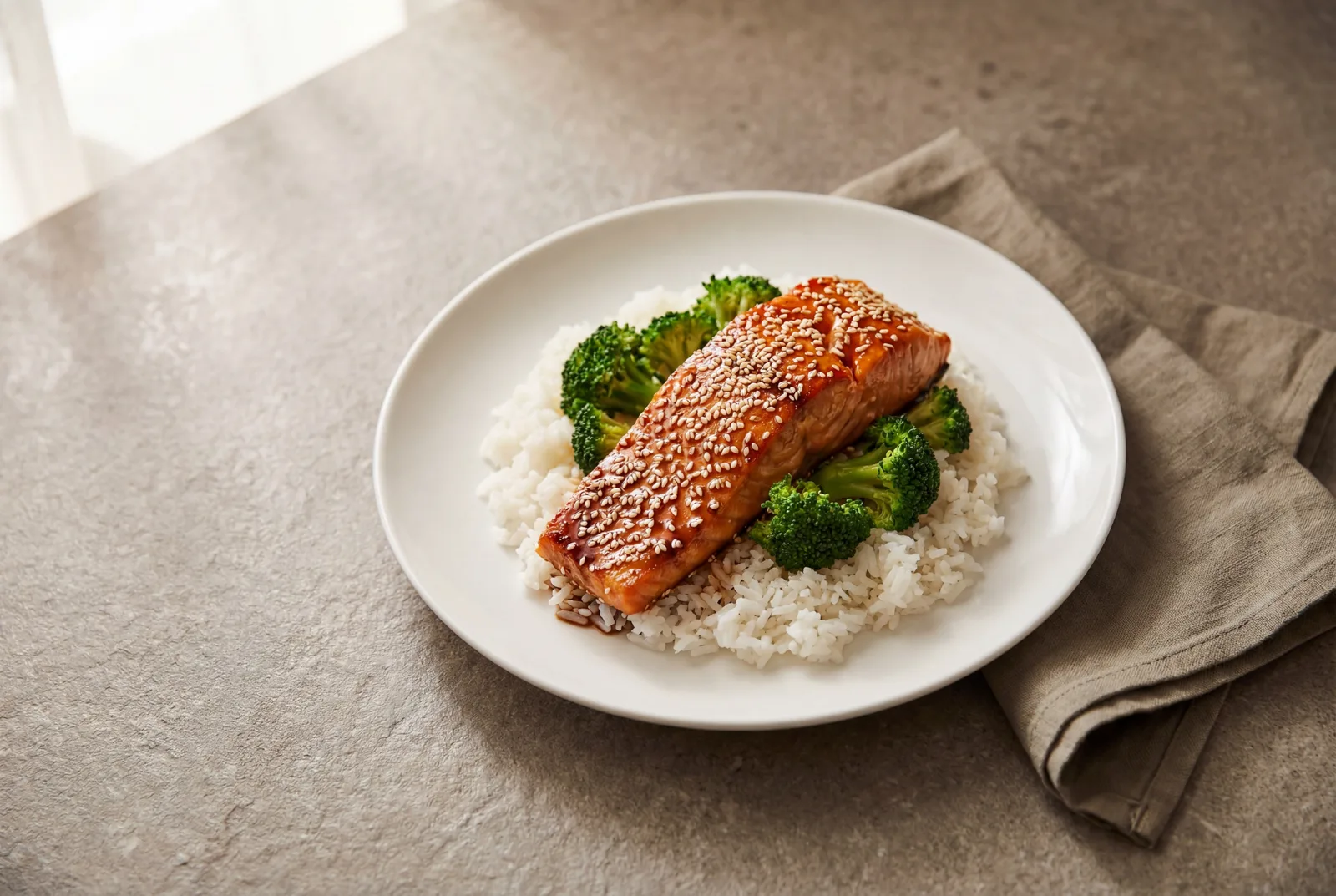
Teriyaki Salmon
Pan-seared salmon with a glossy teriyaki glaze that caramelizes at the edges. Each serving delivers approximately 1.5-2g of anti-inflammatory omega-3 fatty acids. A low-FODMAP sauce you can make in under 30 minutes—perfect for stable remission when you want bold flavors without the gut stress.
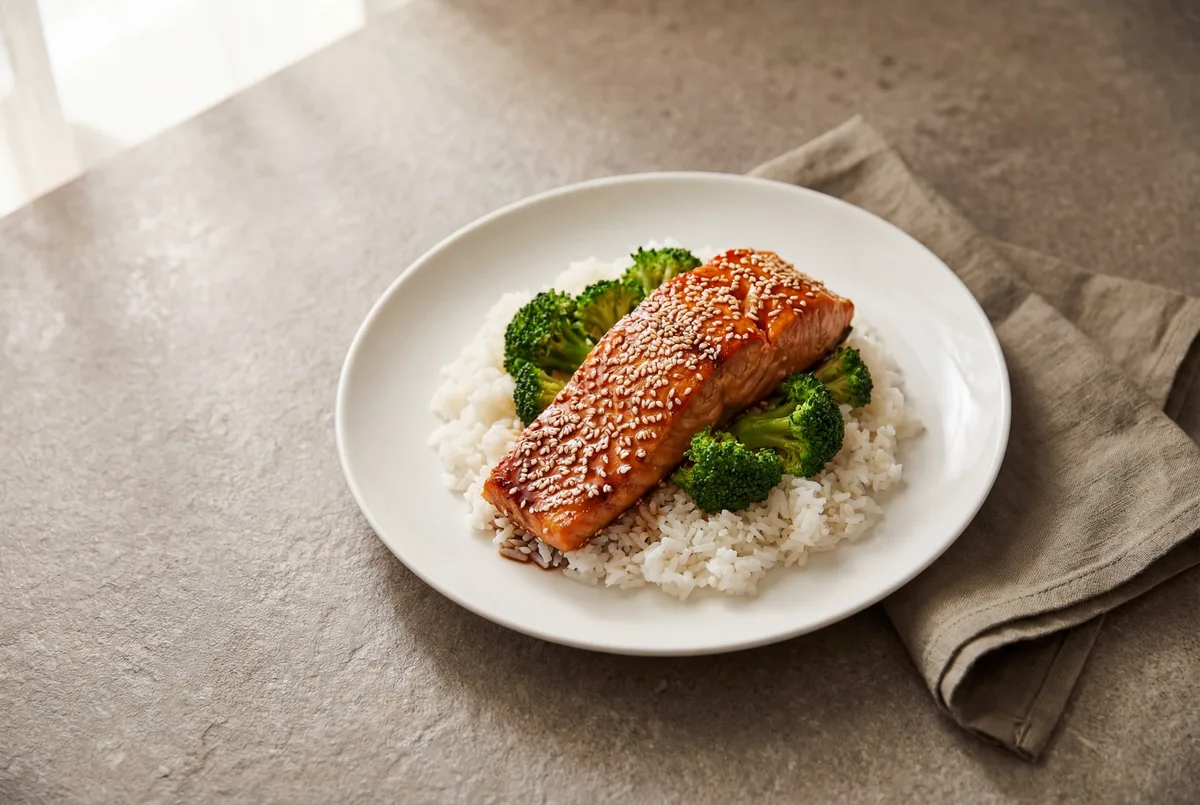
Ingredients
- Low FODMAP
- Low FODMAP
- Low FODMAP
- Low FODMAP
Teriyaki Sauce
Ingredients
- Low FODMAP
- Low FODMAP
- Low FODMAP
- Low FODMAP
- Low FODMAP
- Low FODMAP
Instructions
Whisk together tamari, maple syrup, rice vinegar, sesame oil, and grated ginger in a small bowl until the syrup dissolves completely. Set aside.
Equipment: small bowl, whiskIn a separate small bowl, mix the cornstarch with 1 tablespoon water to create a slurry. Set aside.
Equipment: small bowlPat salmon fillets completely dry with paper towels—removing surface moisture helps achieve a golden sear.
Equipment: paper towelsTip: Dry salmon is key for achieving a golden, crispy searHeat vegetable oil in a large skillet over medium-high heat until it shimmers, about 1-2 minutes.
Equipment: large skilletPlace salmon skin-side up in the hot skillet and cook without moving for 4 minutes, until the edges turn golden brown and crispy.
Tip: Don't move the salmon—let it develop a crustFlip salmon carefully using a spatula and cook for another 3 minutes, until the flesh is opaque and flakes easily with a fork.
145°F (63°C)Pour the teriyaki sauce around the salmon (not directly on top, which would wash away the crust) and let it bubble for 2 minutes.
Tip: Pour sauce around the salmon, not on top—this preserves the crispy crustPush the salmon to one side of the pan, add the cornstarch slurry to the bubbling sauce, and stir rapidly until the sauce thickens to a glossy glaze, about 30 seconds.
Spoon the thickened sauce over the salmon fillets, coating them evenly.
Transfer to plates and garnish with sesame seeds and sliced green onion tops.
Notes
Storage
Refrigerate in an airtight container for up to 3 days. Store salmon and any rice separately to prevent sogginess. Reheat salmon gently in a 300°F (150°C) oven for 8-10 minutes to preserve moisture.
Coconut aminos substitution
Use as a 1:1 replacement for tamari if you're soy-sensitive. Coconut aminos are naturally sweeter and lower in sodium, so reduce the maple syrup by 1 teaspoon and add a pinch of salt to balance the flavor.
SCD modification
Replace maple syrup with honey (use 1.5 tablespoons honey instead of 2 tablespoons maple syrup, as honey is sweeter). Note: honey is amber on Monash at 1 tablespoon, so this modification may not suit strict low-FODMAP. Tamari is SCD-legal if 100% wheat-free.
Skin on or off
Leaving the skin on protects the delicate flesh during cooking and crisps beautifully. You can easily peel it off after cooking if you prefer not to eat it.
Doneness check
Salmon is done at 145°F (63°C) internal temperature, or when it flakes easily with a fork and the center is opaque. Some prefer medium-rare at 125-135°F (52-57°C) for a more tender texture.
Sauce thickness
The cornstarch creates a glossy glaze that clings to the fish. If your sauce is too thick, thin it with 1-2 teaspoons of water. Too thin? Simmer for another 30 seconds.
IBD Considerations
Diet Protocol Compliance
How this recipe fits common IBD dietary approaches