Stir-Fried Bok Choy
Tender baby bok choy seared in garlic-infused sesame oil with fresh ginger—a 10-minute side with just 1g fiber. One of the gentler cruciferous vegetables for those of us with IBD.
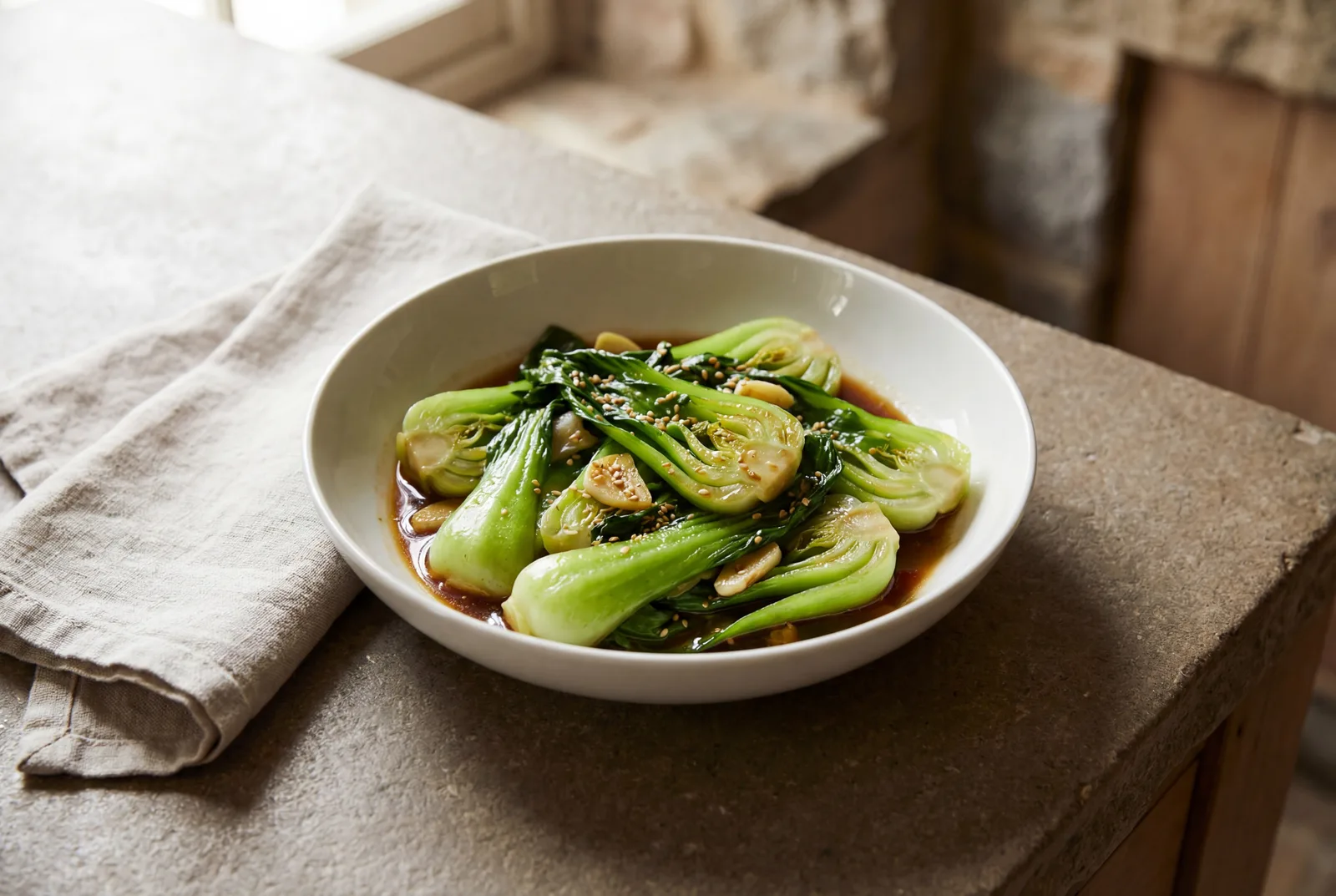
Stir-Fried Bok Choy
Tender baby bok choy seared in garlic-infused sesame oil with fresh ginger—a 10-minute side with just 1g fiber. One of the gentler cruciferous vegetables for those of us with IBD.
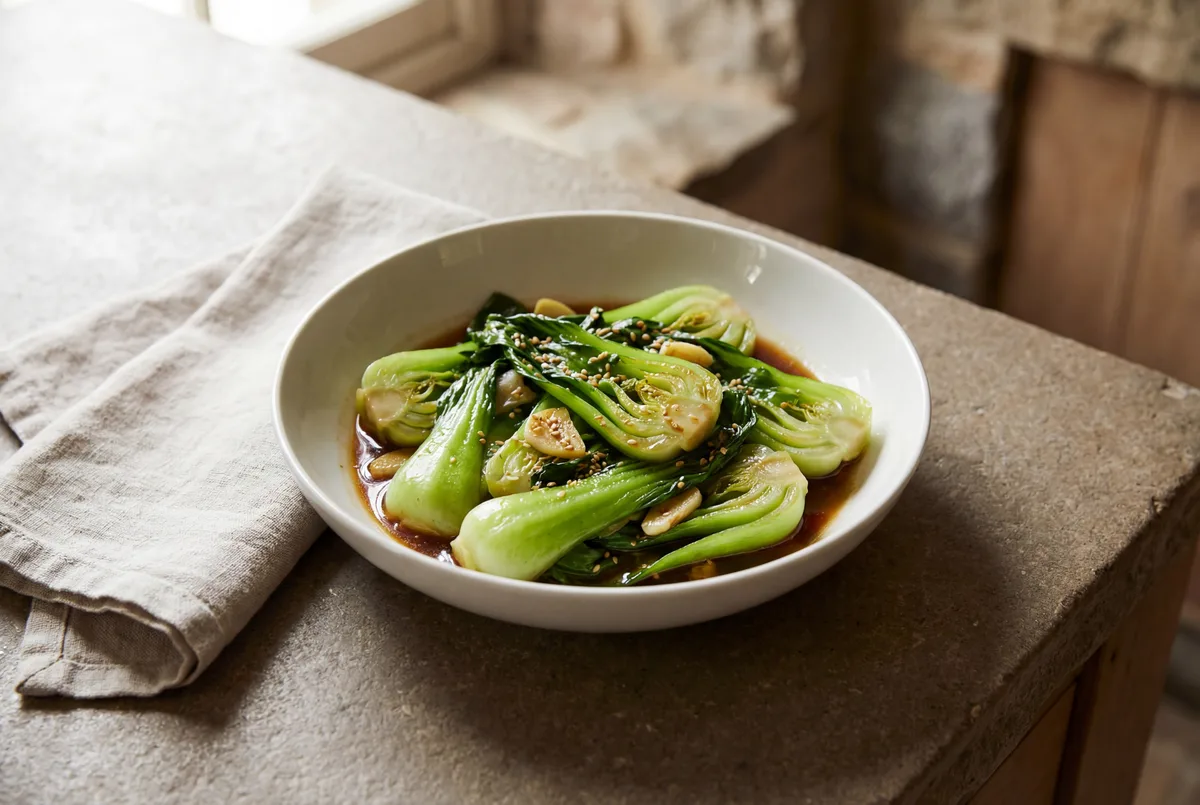
Ingredients
- Low FODMAP
- Low FODMAP
- Low FODMAP
- Low FODMAP
- Low FODMAP
- Low FODMAP
Instructions
Cut baby bok choy in half lengthwise and rinse under cold water to remove any grit between the leaves. Pat completely dry with paper towels or a clean kitchen towel—this is critical for achieving a good sear.
Equipment: cutting board, knife, paper towelsHeat garlic-infused sesame oil in a wok or large skillet over high heat until the oil shimmers and is nearly smoking.
Equipment: wok, large skilletTip: The oil should shimmer and nearly smoke before adding anything—this high heat creates the characteristic wok flavorAdd minced ginger and cook for 30 seconds, stirring constantly, until fragrant but not browned. If the ginger starts to brown, the pan is too hot.
Add bok choy cut side down in a single layer. Work in batches if needed to avoid crowding.
Tip: Work in batches if your pan is crowded—overcrowding leads to steaming instead of searingCook for 2 minutes without stirring, allowing the cut sides to develop golden-brown char marks. Resist the urge to move them—the char adds flavor.
Flip each piece and cook for 2 more minutes, until the stems are crisp-tender when pierced with a fork. They should have some bite but not be raw.
Drizzle tamari over the bok choy and toss gently to coat evenly. The tamari will sizzle and caramelize slightly.
Remove from heat immediately to prevent overcooking—residual heat will continue to cook the vegetables.
Transfer to a serving plate, sprinkle with sesame seeds if using, and serve hot.
Notes
Storage
Refrigerate in an airtight container for up to 2 days. Bok choy loses its crisp texture when reheated, so this is best served fresh. If reheating, do so gently in a skillet over medium heat for 1-2 minutes—microwaving makes it soggy.
Regular bok choy substitution
Use full-sized bok choy if baby bok choy is unavailable. Separate the leaves from the stems, cut stems into 2-inch pieces, and add stems to the pan first since they need longer cooking. Add leaves 1 minute later. Note that regular bok choy has slightly more fiber, so stick with smaller portions if fiber is a concern.
Garlic-infused oil
This is essential for keeping the recipe low-FODMAP. Fresh garlic contains fructans that trigger symptoms for many of us, but fructans don't transfer to oil because they're water-soluble, not fat-soluble. Use store-bought garlic-infused oil from a reputable brand, or make your own and refrigerate for up to 3-4 days (longer storage risks botulism).
High heat is key
The wok or skillet must be smoking hot before adding bok choy. This creates the slight char that defines good stir-fry and keeps the vegetable crisp-tender instead of steamed and soggy.
Tamari vs soy sauce
Regular soy sauce contains wheat, so always use gluten-free tamari for those with celiac disease or gluten sensitivity. Brands like Kikkoman and San-J offer certified gluten-free versions.
AIP modification
For strict AIP elimination phase: omit sesame seeds (they're seeds), replace tamari with coconut aminos, and use garlic-infused olive oil instead of sesame oil. The dish will have a different flavor profile but remains satisfying.
IBD Considerations
Diet Protocol Compliance
How this recipe fits common IBD dietary approaches