Roasted Pork Tenderloin
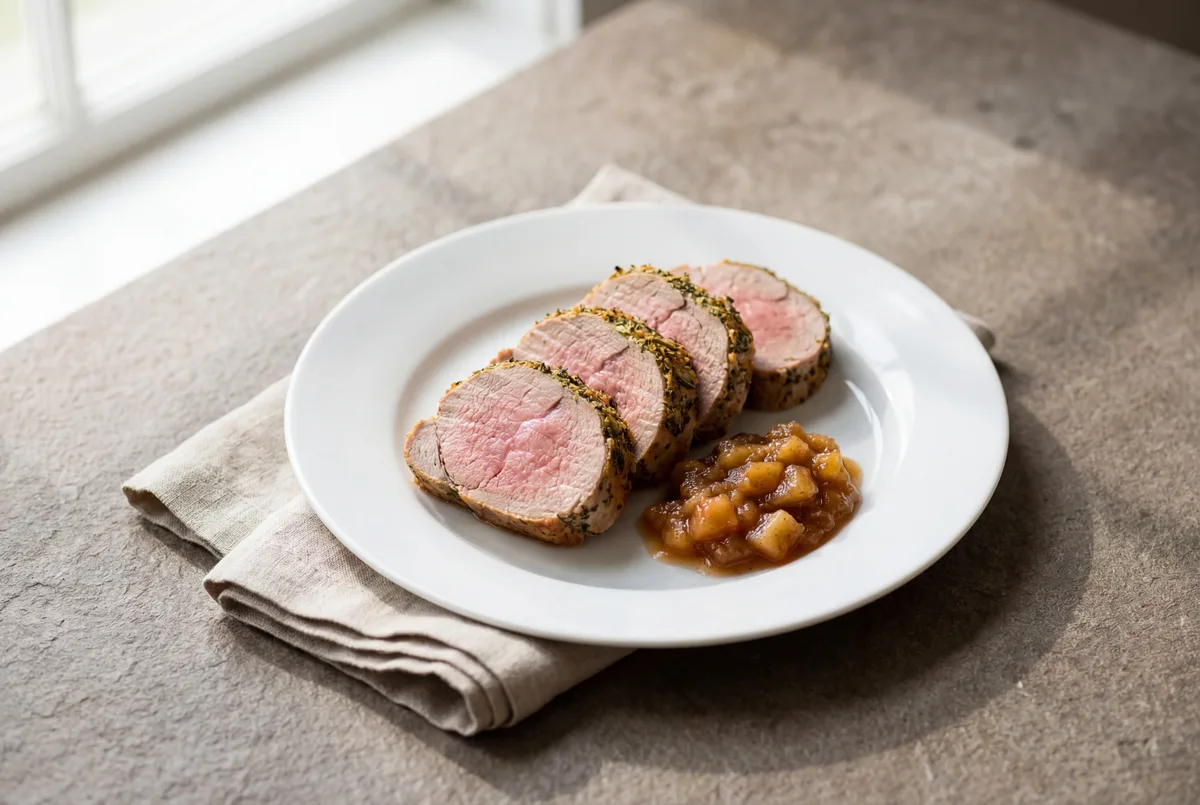
Herb-crusted pork tenderloin with a caramelized exterior and pink, juicy center. One of the leanest cuts available with 32g protein and virtually no fiber—a reliable option many of us reach for during active flares.
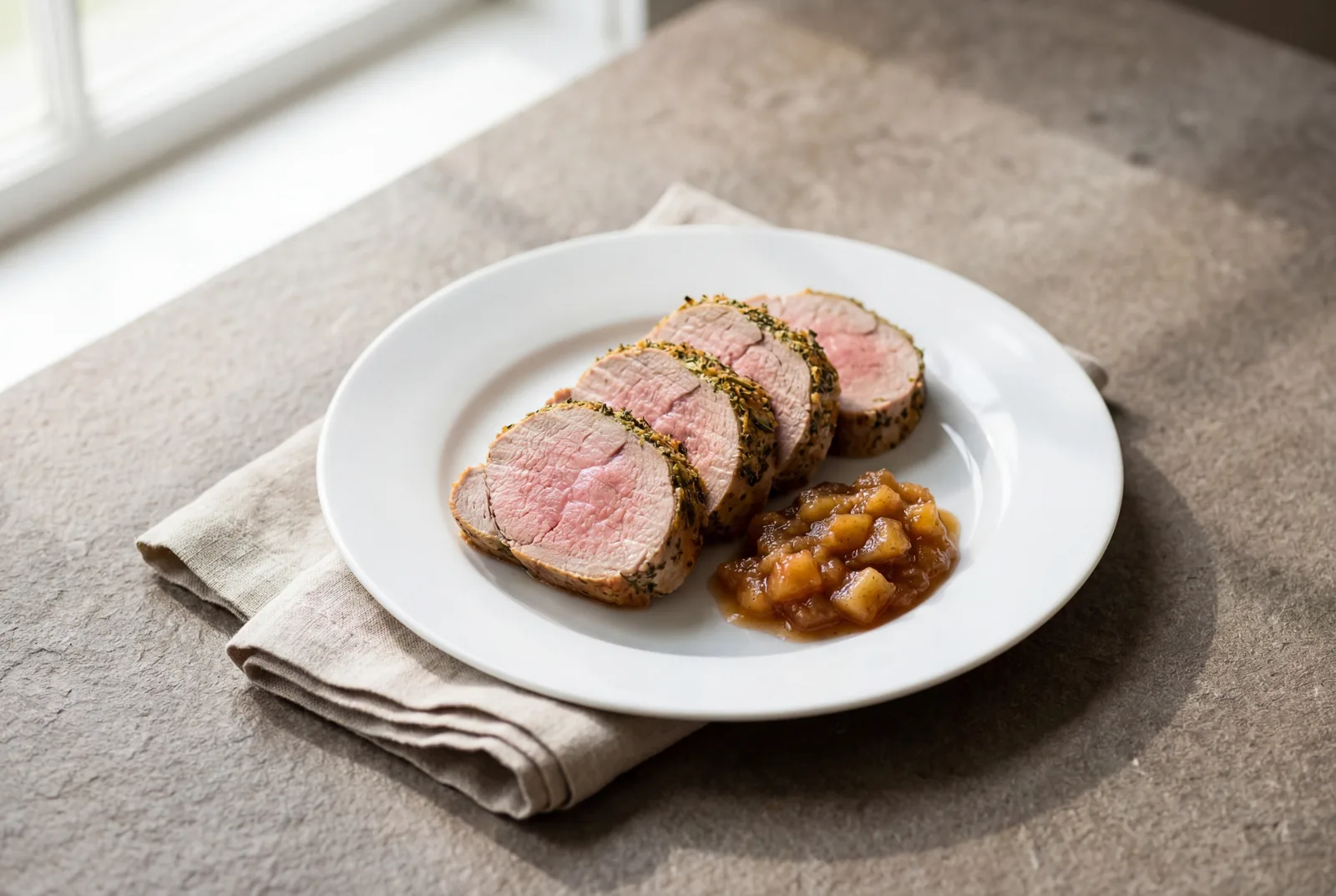
Roasted Pork Tenderloin
Herb-crusted pork tenderloin with a caramelized exterior and pink, juicy center. One of the leanest cuts available with 32g protein and virtually no fiber—a reliable option many of us reach for during active flares.
Ingredients
- Low FODMAP
- Low FODMAP
- Low FODMAP
- Low FODMAP
- Low FODMAP
- Low FODMAP
- Low FODMAP
- Moderate FODMAP
- Low FODMAP
Optional Glaze
Instructions
Remove pork from refrigerator and let sit at room temperature for 30 minutes. This ensures even cooking throughout.
Tip: Cold meat cooks unevenly—room temp ensures a consistent pink centerPreheat oven to 425°F (220°C).
425°F (220°C)Equipment: ovenPat pork completely dry with paper towels.
Equipment: paper towelsTip: Moisture prevents proper browning—dry meat sears betterIf using mustard, brush a thin layer all over the tenderloin to help the herbs adhere.
Drizzle garlic-infused oil over the pork and rub to coat evenly.
Combine thyme, rosemary, salt, and pepper in a small bowl. Rub the herb mixture all over the tenderloin, pressing gently so it sticks.
Equipment: small bowlHeat an oven-safe skillet (cast iron or stainless steel) over medium-high heat until very hot, about 2-3 minutes.
Equipment: oven-safe skilletTip: Cast iron or stainless steel works best—the pan needs to be very hotSear pork for 2 minutes per side, turning to brown all four sides. You should hear a sizzle when it hits the pan and see a golden-brown crust forming.
Transfer the skillet directly to the preheated oven.
Roast for 15-20 minutes, until an instant-read thermometer inserted into the thickest part reads 145°F (63°C). The meat should feel firm but still have slight give when pressed.
145°F (63°C)Tip: Use an instant-read thermometer—pork tenderloin dries out quickly past 150°FIf using glaze, whisk together maple syrup and tamari. Brush over the tenderloin during the last 5 minutes of roasting.
Remove from oven and transfer pork to a cutting board. Let rest for 5-10 minutes.
Equipment: cutting boardTip: The internal temperature will rise to 150°F during resting as juices redistributeSlice crosswise into 1/2-inch medallions. Serve immediately.
Notes
Storage
Refrigerate sliced pork in an airtight container for up to 4 days. Store separately from any sides to prevent sogginess. Reheat gently in a 300°F (150°C) oven for 10 minutes, covered with foil to retain moisture.
Remove the silver skin
Look for a thin, silvery membrane running along one side of the tenderloin. Slide a knife under it and pull it off—it's chewy and won't break down during cooking.
Oil substitute
Use plain olive oil if garlic-infused isn't available. The garlic-infused version adds flavor while staying low-FODMAP, but it's optional.
FODMAP-friendly glaze
For strict low-FODMAP compliance, use rice malt syrup instead of maple syrup. For SCD compliance, use honey instead.
Scaling
Two tenderloins fit in most skillets. Cooking time stays the same—just check both with a thermometer.
Freezing
Wrap cooled, sliced pork tightly in plastic wrap, then foil. Freeze for up to 3 months. Thaw in the refrigerator overnight.
IBD Considerations
Diet Protocol Compliance
How this recipe fits common IBD dietary approaches