Greek Moussaka (Adapted)
Tender roasted eggplant layered with cinnamon-spiced lamb and silky bechamel—a simplified take on the Greek classic for remission days when you're craving something special.
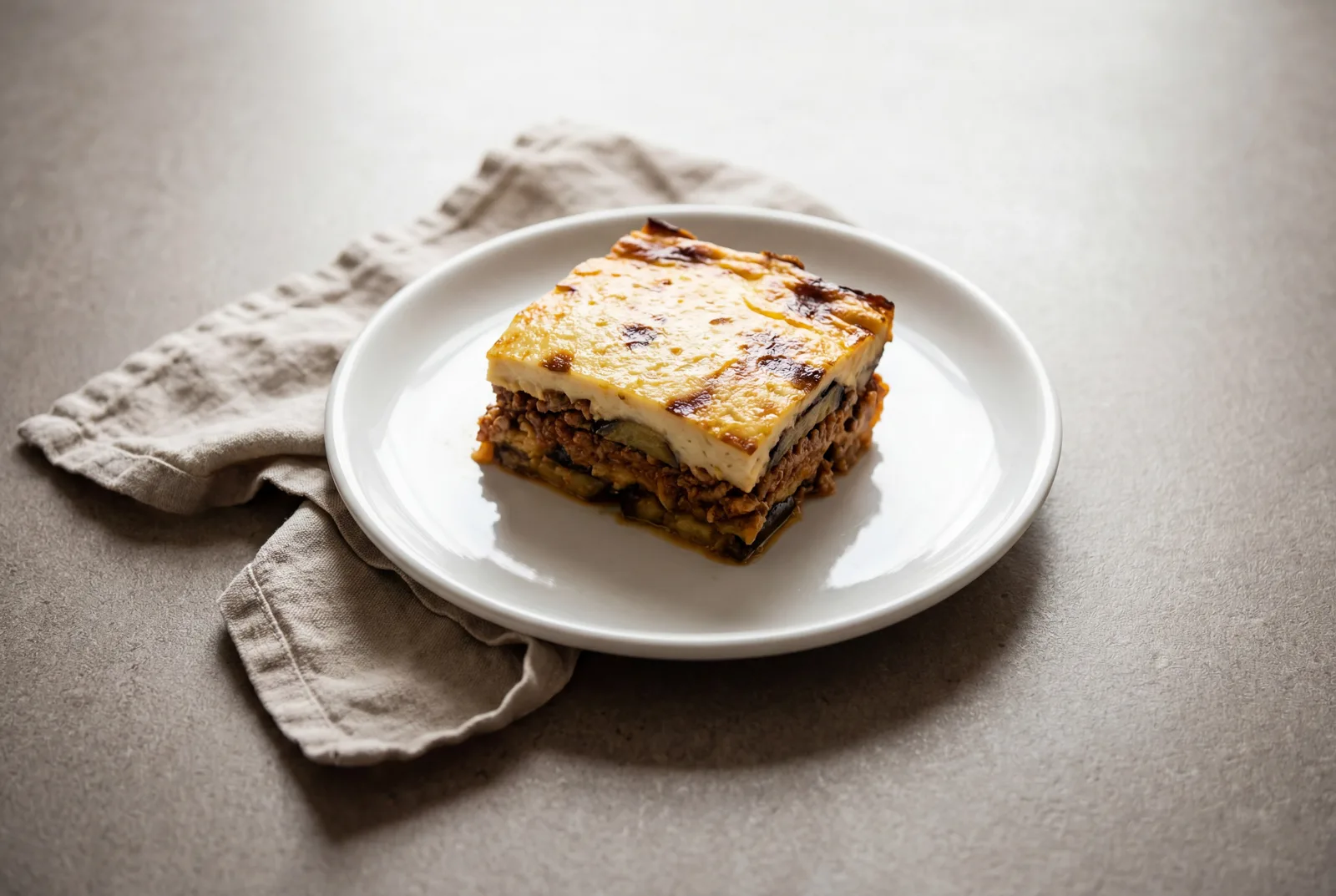
Greek Moussaka (Adapted)
Tender roasted eggplant layered with cinnamon-spiced lamb and silky bechamel—a simplified take on the Greek classic for remission days when you're craving something special.
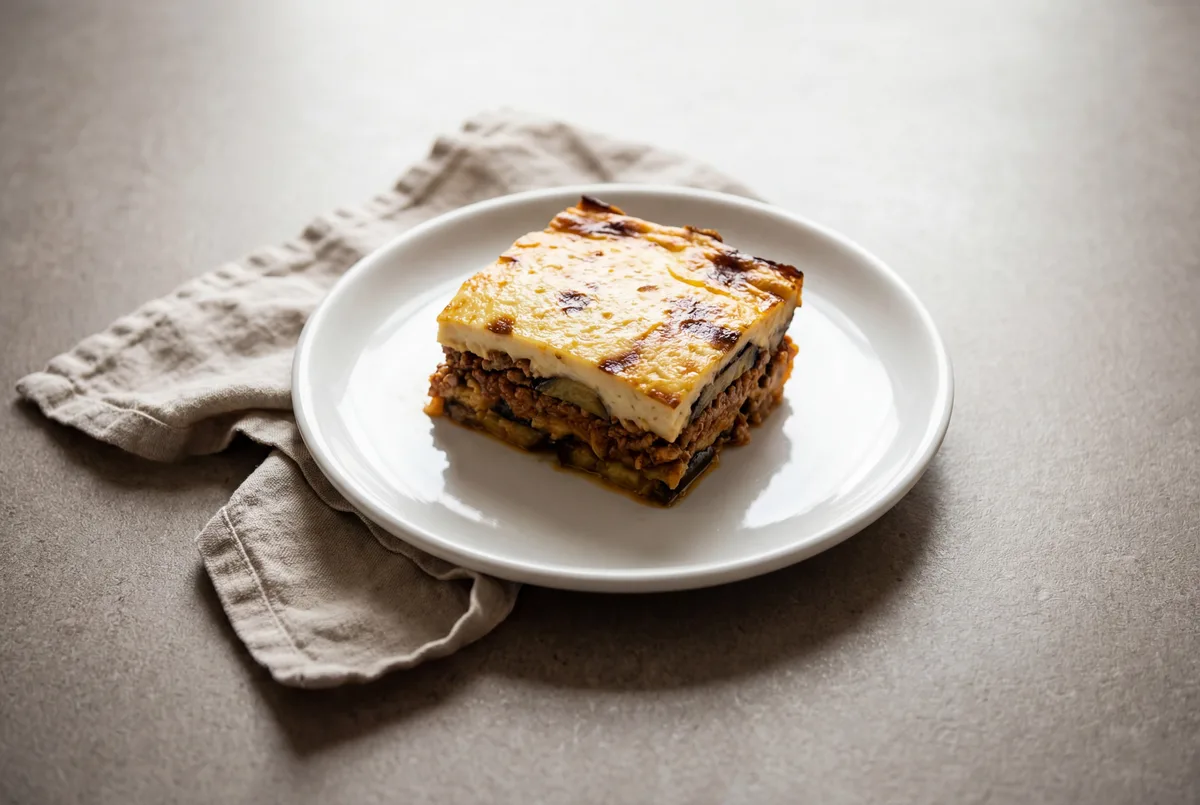
Ingredients
- Low FODMAP
- Low FODMAP
- Low FODMAP
- Low FODMAP
- Low FODMAP
- Low FODMAP
- Low FODMAP
- Low FODMAP
- Low FODMAP
- Low FODMAP
- Low FODMAP
- Low FODMAP
- Low FODMAP
- Low FODMAP
- Low FODMAP
- Low FODMAP
- Low FODMAP
Eggplant Layer
Meat Layer
Bechamel
Instructions
Sprinkle both sides of eggplant slices generously with salt and arrange in a single layer on a baking sheet lined with paper towels. Let sit 30 minutes.
Equipment: baking sheet, paper towelsTip: You'll see beads of moisture form on the surface - this is excess water leaving the eggplantRinse the slices under cold water to remove all the salt, then pat completely dry with clean paper towels or a kitchen cloth.
Equipment: paper towelsPreheat oven to 400°F (200°C).
400°F (200°C)Brush both sides of each slice with olive oil and arrange on parchment-lined baking sheets in a single layer.
Equipment: baking sheets, parchment paper, pastry brushRoast for 20-25 minutes, flipping halfway through, until the eggplant is soft, golden brown, and starting to caramelize at the edges.
400°F (200°C)Tip: Flip halfway through for even browningRemove from oven and reduce temperature to 350°F (175°C) for assembly.
350°F (175°C)Heat garlic-infused oil in a large skillet over medium-high heat until shimmering.
Equipment: large skilletAdd ground lamb and break it up with a wooden spoon. Cook for 7-8 minutes, stirring occasionally, until the meat is deeply browned with no pink remaining.
Equipment: wooden spoonAdd crushed tomatoes, red wine, cinnamon, allspice, bay leaf, and salt. Stir to combine.
Reduce heat to medium-low and simmer uncovered for 20-25 minutes, stirring occasionally, until the sauce has thickened and reduced by about one-third. Remove and discard the bay leaf.
Tip: The sauce should reduce by about one-thirdMelt butter in a medium saucepan over medium heat until foaming.
Equipment: medium saucepan, whiskWhisk in rice flour and cook for 2 minutes, stirring constantly, until the mixture turns light golden and smells nutty.
Tip: This is your roux - it should smell nutty, not rawGradually add lactose-free milk in a slow, steady stream while whisking constantly to prevent lumps from forming.
Tip: Add milk slowly while whisking to prevent lumpsContinue cooking and whisking for 5-7 minutes, until the sauce thickens enough to coat the back of a spoon. You should see steady bubbles breaking the surface.
Remove from heat and stir in grated Parmesan and nutmeg until the cheese melts completely.
Let the sauce cool for 3-4 minutes, then whisk in the egg yolk until fully incorporated and smooth.
Tip: Cooling slightly prevents the egg yolk from scramblingArrange half of the roasted eggplant slices in an even layer in a 9x13-inch baking dish, overlapping slightly if needed.
Equipment: 9x13-inch baking dishSpread all of the meat sauce evenly over the eggplant layer, using a spatula to reach the edges.
Equipment: spatulaTop with the remaining eggplant slices in another even layer.
Pour the bechamel sauce over the entire surface, using an offset spatula or the back of a spoon to spread it to the edges and seal in the layers below.
Equipment: offset spatulaTip: Spread bechamel to the edges to seal in the layersBake uncovered for 45-50 minutes, until the top is deeply golden brown and you see bubbles breaking through at the edges.
350°F (175°C)Remove from oven and let rest for 15 minutes before slicing.
Tip: Resting allows the layers to set so they cut cleanly
Eggplant
Meat Sauce
Bechamel
Assembly
Notes
Storage
Refrigerate in an airtight container for up to 4 days. Reheat individual portions in the microwave at 50% power to prevent the bechamel from separating. Freezes well for up to 3 months—thaw overnight in the fridge before reheating.
Make-ahead
Assemble completely, cover tightly, and refrigerate up to 24 hours before baking. Add 10-15 minutes to the bake time if going straight from fridge to oven.
Leaner meat option
Use ground sirloin or extra-lean ground beef (90/10 or 93/7) to reduce fat content. Drain any excess fat after browning to make it gentler on the digestive system.
Dairy-free adaptation
Replace butter with olive oil and use full-fat coconut milk in place of lactose-free milk for the bechamel. Omit the Parmesan or use nutritional yeast for a cheesy flavor.
No onion
Traditional moussaka uses lots of onion. We use garlic-infused oil instead to keep it low-FODMAP while maintaining flavor depth.
Why salt eggplant
Salting draws out bitterness and excess moisture, making the eggplant softer and more digestible. Don't skip this step.
IBD Considerations
Diet Protocol Compliance
How this recipe fits common IBD dietary approaches