Fresh Mint Tea
Bright, aromatic mint tea with natural anti-spasmodic properties. Caffeine-free, hydrating, and gentle enough to sip during a flare—this is your go-to when your gut needs soothing. Research suggests peppermint may help relax smooth muscle in the digestive tract.
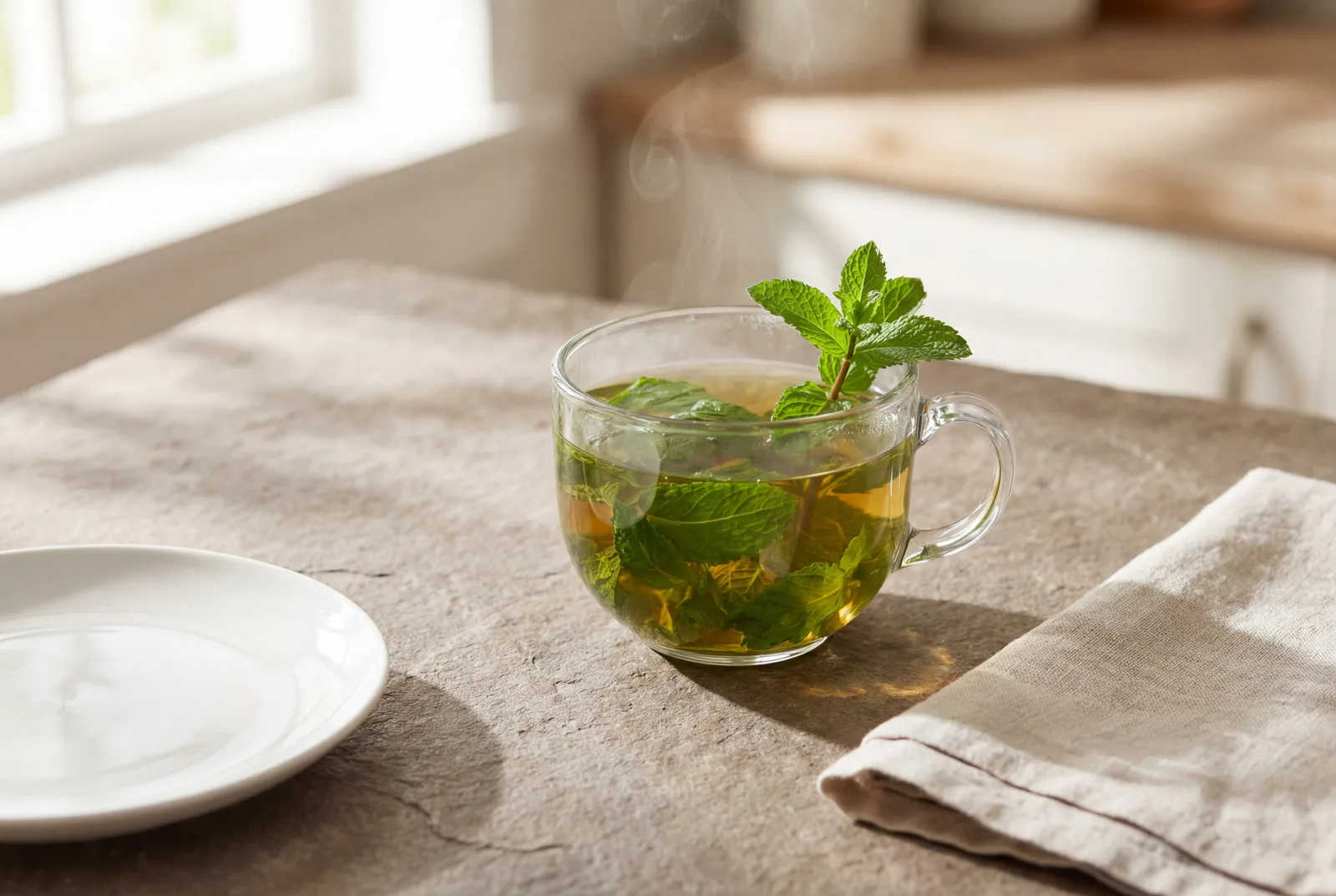
Fresh Mint Tea
Bright, aromatic mint tea with natural anti-spasmodic properties. Caffeine-free, hydrating, and gentle enough to sip during a flare—this is your go-to when your gut needs soothing. Research suggests peppermint may help relax smooth muscle in the digestive tract.
Ingredients
- Low FODMAP
- Low FODMAP
- High FODMAP
- Low FODMAP
Instructions
Rinse the mint leaves under cool water and place them in a teapot or heat-safe pitcher.
Equipment: teapot or heat-safe pitcherGently bruise the leaves by pressing them with the back of a spoon to release the aromatic oils.
Tip: You should smell the mint oils release immediately—that's when you know you've done it rightPour the boiling water over the mint leaves, making sure all leaves are submerged.
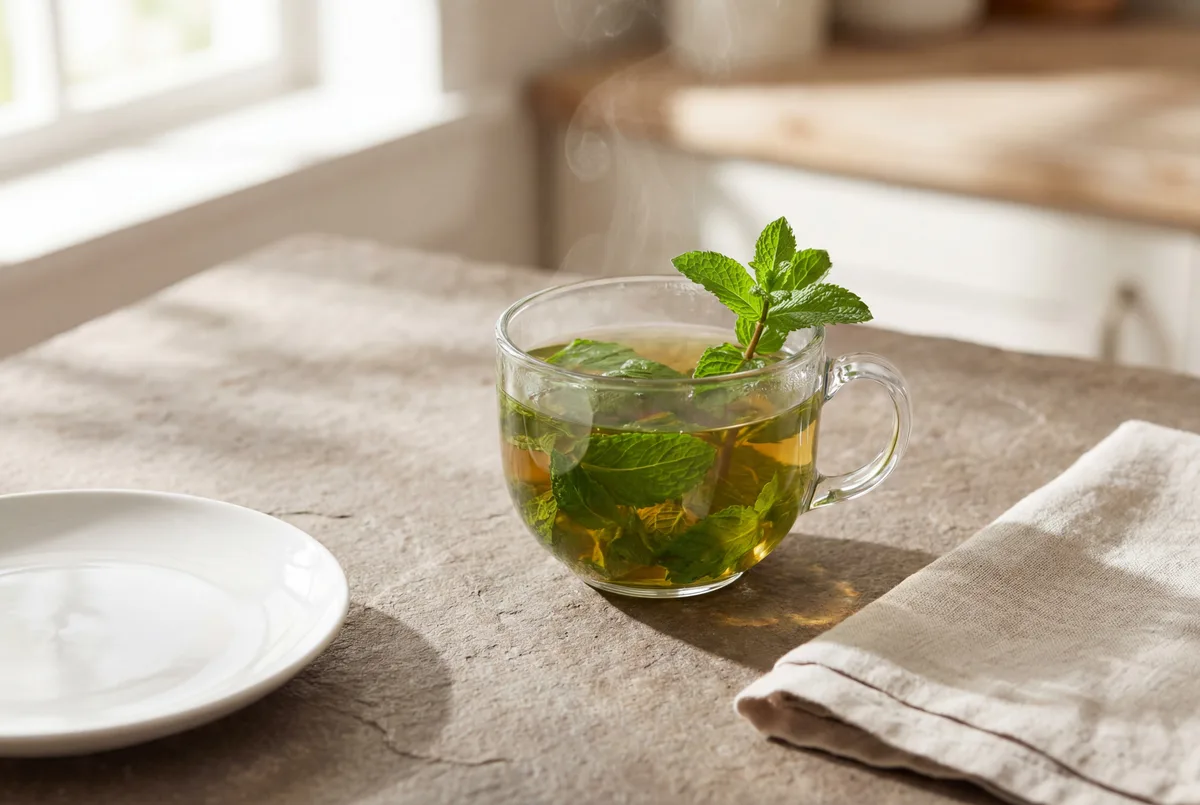
Cover the teapot and steep for 5-7 minutes, until the water turns a pale golden-green and the mint aroma fills the air.
Tip: Unlike black or green tea, mint tea won't become bitter with longer steeping—go the full 7 minutes for maximum benefitStrain the tea into cups, pressing gently on the leaves to extract any remaining flavor.
Equipment: strainerStir in honey if using, letting it dissolve completely.
Serve warm for immediate soothing, or let cool to room temperature and pour over ice for a refreshing chilled version.
Notes
Storage
Best consumed fresh. If making ahead, refrigerate brewed tea in a sealed container for up to 2 days. The flavor will mellow slightly but remains soothing.
Fresh vs dried mint
Fresh mint delivers the most aromatic, vibrant flavor. If using dried mint, substitute 1 tablespoon dried for the fresh leaves—the oils are more concentrated.
Mint varieties
Peppermint has a stronger, more medicinal menthol flavor and is most studied for digestive benefits. Spearmint is milder, slightly sweeter, and less likely to trigger reflux in sensitive individuals.
Low-FODMAP modification
Honey is high-FODMAP due to excess fructose. For strict low-FODMAP, omit the sweetener entirely or use maple syrup (green at 2 tablespoons per Monash).
Growing mint
Mint is one of the easiest herbs to grow. Keep a pot on your windowsill for an endless, fresh supply—just pinch off what you need.
IBD Considerations
Diet Protocol Compliance
How this recipe fits common IBD dietary approaches