Maple Glazed Salmon
Tender baked salmon with a sweet-savory honey-tamari glaze. Anti-inflammatory omega-3s, zero fiber, and ready in 20 minutes—a flare-friendly protein that many of us find gentle and satisfying.
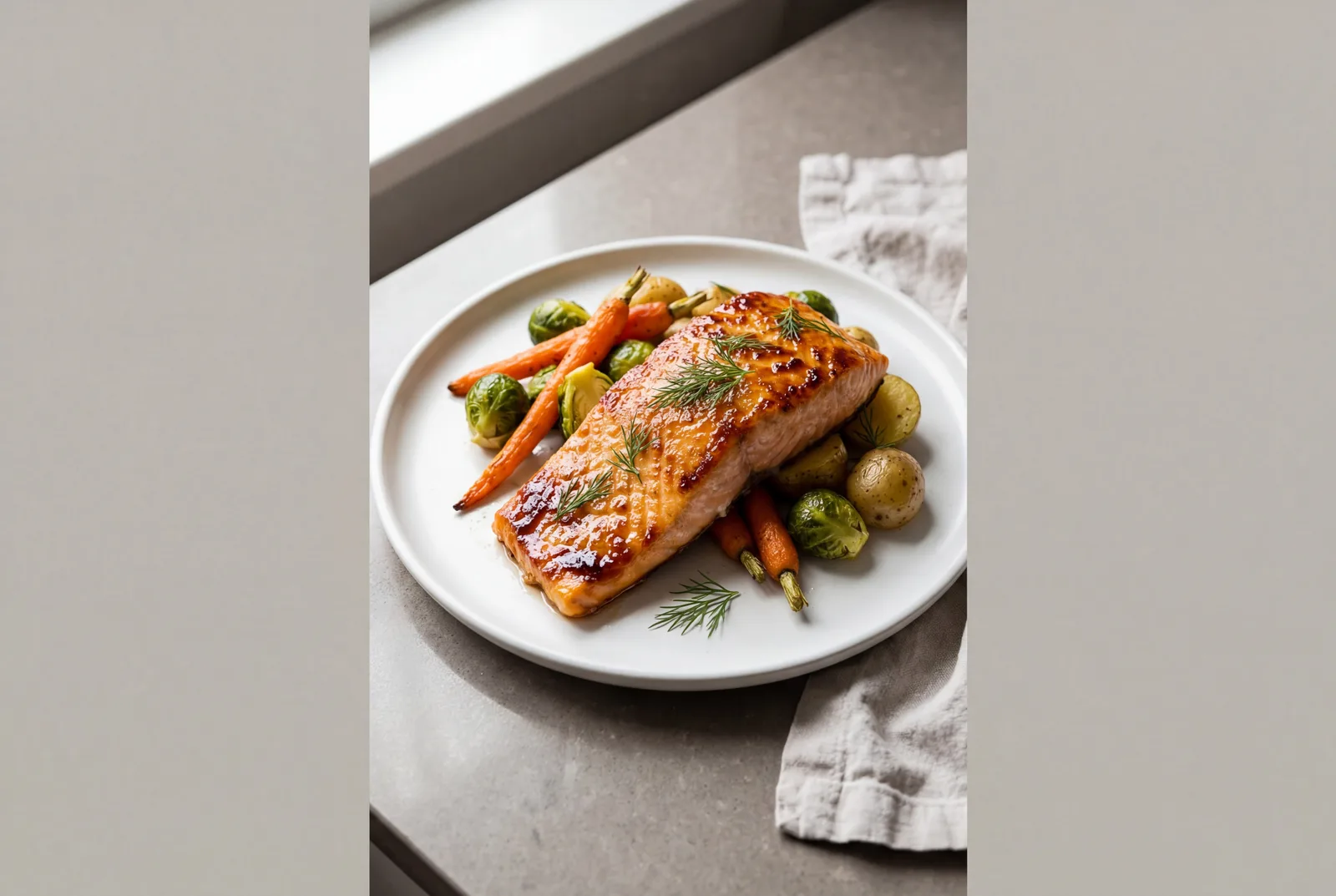
Maple Glazed Salmon
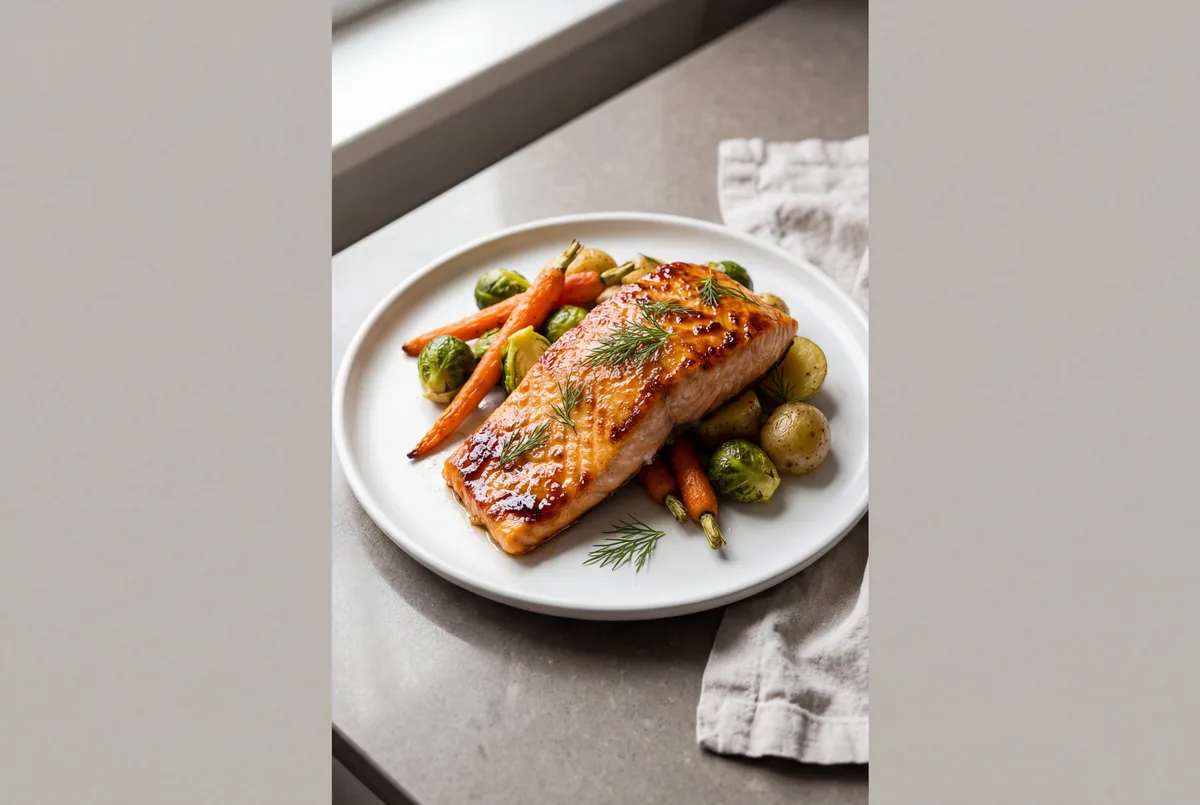
Tender baked salmon with a sweet-savory honey-tamari glaze. Anti-inflammatory omega-3s, zero fiber, and ready in 20 minutes—a flare-friendly protein that many of us find gentle and satisfying.
Ingredients
- Low FODMAP
- Low FODMAP
- Low FODMAP
- Low FODMAP
- Low FODMAP
- Low FODMAP
- Low FODMAP
- Low FODMAP
Instructions
Preheat oven to 400°F (200°C) and line a baking sheet with parchment paper.
400°F (200°C)Equipment: baking sheet, parchment paperPat salmon fillets completely dry with paper towels and place skin-side down on the prepared baking sheet.
Equipment: paper towelsTip: Dry salmon is key for better caramelization on the glazeSeason the top of each fillet lightly with salt and pepper (if using).
Whisk together honey, tamari, garlic-infused oil, and Dijon mustard in a small bowl until smooth and well combined.
Equipment: small bowl, whiskBrush half the glaze generously over the top of each salmon fillet, coating evenly.
Tip: Reserve half the glaze for finishing—this creates layers of flavorBake for 12-15 minutes, until the salmon flakes easily when pressed gently with a fork and the thickest part is opaque throughout. Internal temperature should reach 145°F (63°C) for food safety.
145°F (63°C)Tip: Many prefer 135-140°F for a more tender, slightly translucent centerRemove from the oven and immediately brush the remaining glaze over the hot salmon.
Tip: The residual heat caramelizes the fresh glaze slightlyLet the salmon rest for 2 minutes before serving.
Serve with fresh lemon wedges on the side for squeezing over the top, if desired.
Notes
Storage
Refrigerate in an airtight container for up to 3 days. Store leftover glaze separately. Reheat salmon gently in a 300°F (150°C) oven for 5-7 minutes to prevent drying, or enjoy cold over salad.
SCD substitution
Maple syrup is SCD-illegal (disaccharide). The main recipe uses honey, which is a monosaccharide and fully SCD-compliant. Verify your Dijon mustard contains only mustard seeds, vinegar, salt, and spices—no added sugars or starches.
Dijon mustard
Some brands add wine or other ingredients that may not be SCD-legal or may irritate acid-sensitive individuals. Grey Poupon and Maille are generally safe choices—check the label.
Skin on
Leaving the skin on creates a protective barrier during cooking and keeps the salmon moist. Simply peel it off before eating if you prefer.
Broiler option
For a more caramelized glaze, turn the broiler on high for the last 1-2 minutes of cooking. Watch closely to prevent burning.
Wild vs farmed
Both types work well. Wild-caught salmon typically contains higher levels of omega-3 fatty acids, but farmed salmon is more affordable and still provides substantial anti-inflammatory benefits.
IBD Considerations
Diet Protocol Compliance
How this recipe fits common IBD dietary approaches