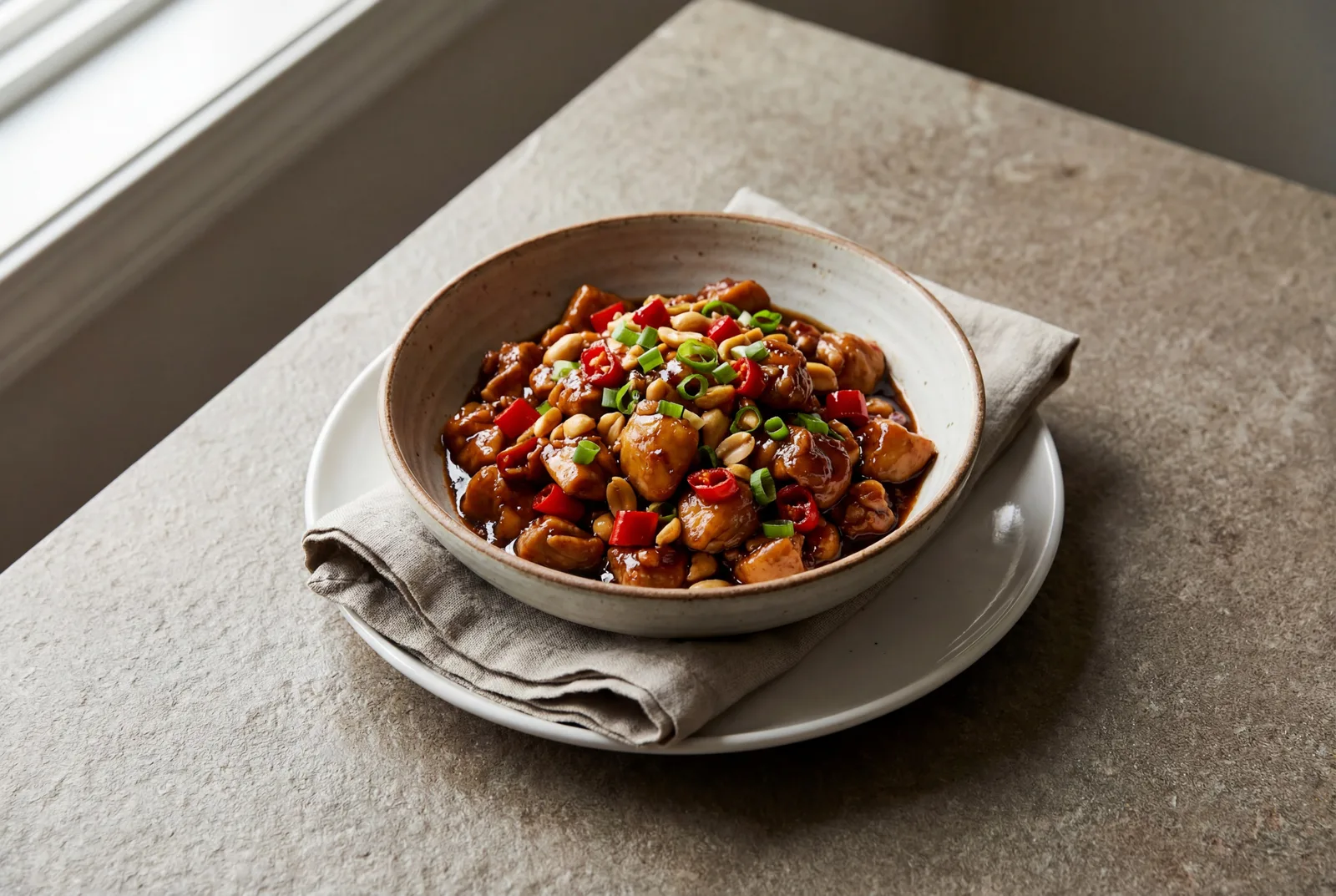
Kung Pao Chicken (Mild)
Traditional Kung Pao chicken without the heat—tender chicken thighs, crunchy peanuts, and a glossy umami sauce. Same savory-sweet balance, zero capsaicin. A remission-friendly take on a classic.
Kung Pao Chicken (Mild)
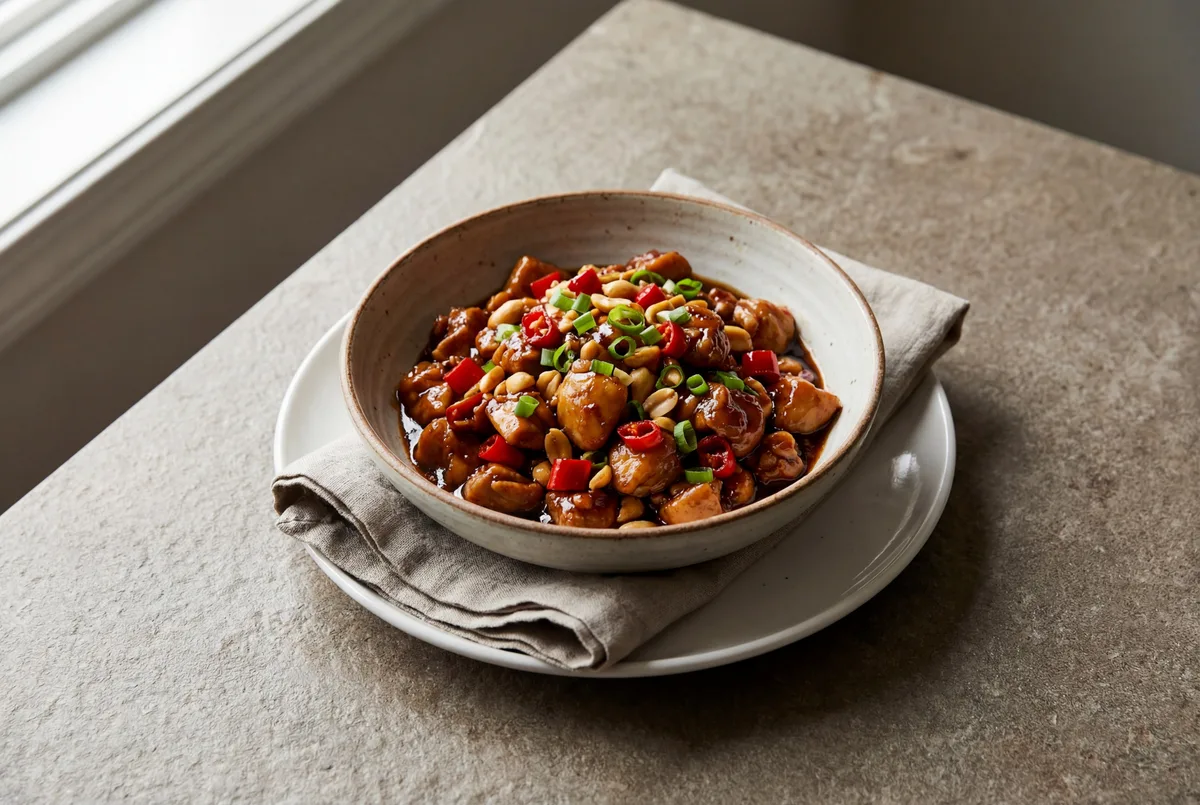
Traditional Kung Pao chicken without the heat—tender chicken thighs, crunchy peanuts, and a glossy umami sauce. Same savory-sweet balance, zero capsaicin. A remission-friendly take on a classic.
Ingredients
- Low FODMAP
- Low FODMAP
- Low FODMAP
- Low FODMAP
- Low FODMAP
- Low FODMAP
- Moderate FODMAP
- Low FODMAP
- Low FODMAP
- Low FODMAP
- Low FODMAP
- Low FODMAP
- Low FODMAP
- Low FODMAP
- Low FODMAP
- Low FODMAP
Instructions
Combine the cubed chicken, 1 tablespoon cornstarch, 1 tablespoon tamari, and rice wine in a medium bowl. Toss until evenly coated and let marinate for 15 minutes at room temperature.
Equipment: medium bowlWhile the chicken marinates, whisk together the 3 tablespoons tamari, rice vinegar, honey, and sesame oil in a small bowl until the honey dissolves. Set aside.
Equipment: small bowl, whiskIn a separate small bowl, mix 1 tablespoon cornstarch with 2 tablespoons water until smooth. This is your slurry for thickening. Set aside.
Equipment: small bowlHeat 2 tablespoons of the garlic-infused oil in a large wok or skillet over high heat until shimmering and almost smoking.
high heatEquipment: large wok, spatulaTip: Have all ingredients prepped and within arm's reach—stir-frying moves fastAdd the marinated chicken in a single layer. Let it sear undisturbed for 1-2 minutes until golden on the bottom.
Stir-fry the chicken for 3-4 more minutes, tossing occasionally, until cooked through and the edges are crispy. Transfer to a clean plate and set aside.
Add the remaining 1 tablespoon garlic-infused oil and the minced ginger to the wok. Stir-fry for 10-15 seconds until fragrant—don't let it burn.
Add the diced zucchini and stir-fry for 2-3 minutes until tender-crisp and still vibrant green.
Return the chicken to the wok and toss to combine with the zucchini.
Pour the sauce over the chicken and vegetables, tossing to coat everything evenly.
Give the cornstarch slurry a quick stir to recombine, then pour it into the wok. Cook for 1-2 minutes, tossing constantly, until the sauce thickens and coats the chicken with a glossy finish.
Tip: The sauce should coat a spoon and have a glossy sheenRemove from heat immediately. Toss in the peanuts and sliced green onions.
Serve hot over cooked white rice.
Notes
Storage
Refrigerate in an airtight container for up to 3 days, storing rice separately for best texture. Reheat gently in a skillet over medium heat, adding a splash of water to loosen the sauce. Microwave works but may make the chicken rubbery.
Freezing
Freezes well for up to 2 months. Freeze chicken and vegetables separately from rice. Thaw overnight in the refrigerator and reheat thoroughly before serving.
Peanut alternatives
If whole peanuts don't agree with you, stir 2 tablespoons smooth peanut butter into the sauce instead. You'll get the nutty flavor without the texture, and peanut butter is often easier to digest. Roasted cashews are another option with similar crunch.
Bell pepper variation
Add 1 diced red bell pepper with the zucchini if you tolerate nightshades. Bell peppers are low-FODMAP at 43g per Monash and add sweetness and color.
Prep ahead
Stir-frying moves fast. Marinate the chicken, prep the sauce and slurry, and chop all vegetables before you heat the wok. Everything should be within arm's reach.
Tamari verification
Always check that your tamari label says "gluten-free." Regular soy sauce and some tamari brands contain wheat, which can trigger symptoms in gluten-sensitive IBD patients.
IBD Considerations
Diet Protocol Compliance
How this recipe fits common IBD dietary approaches