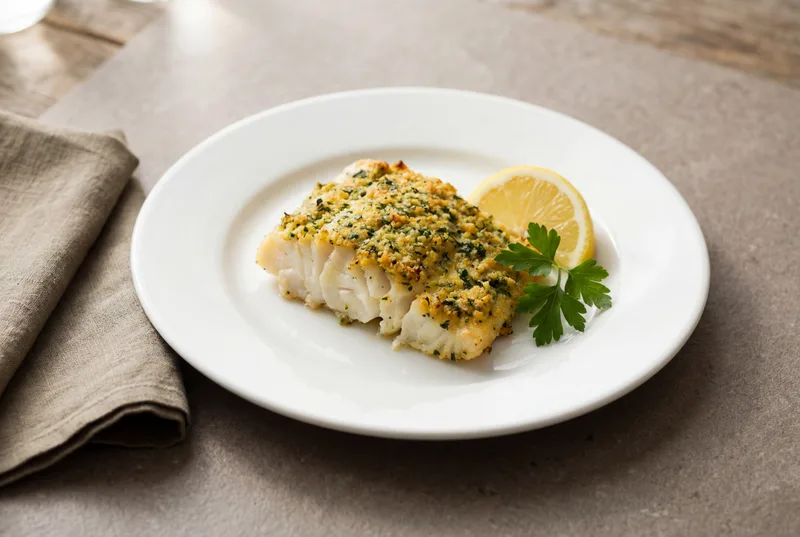
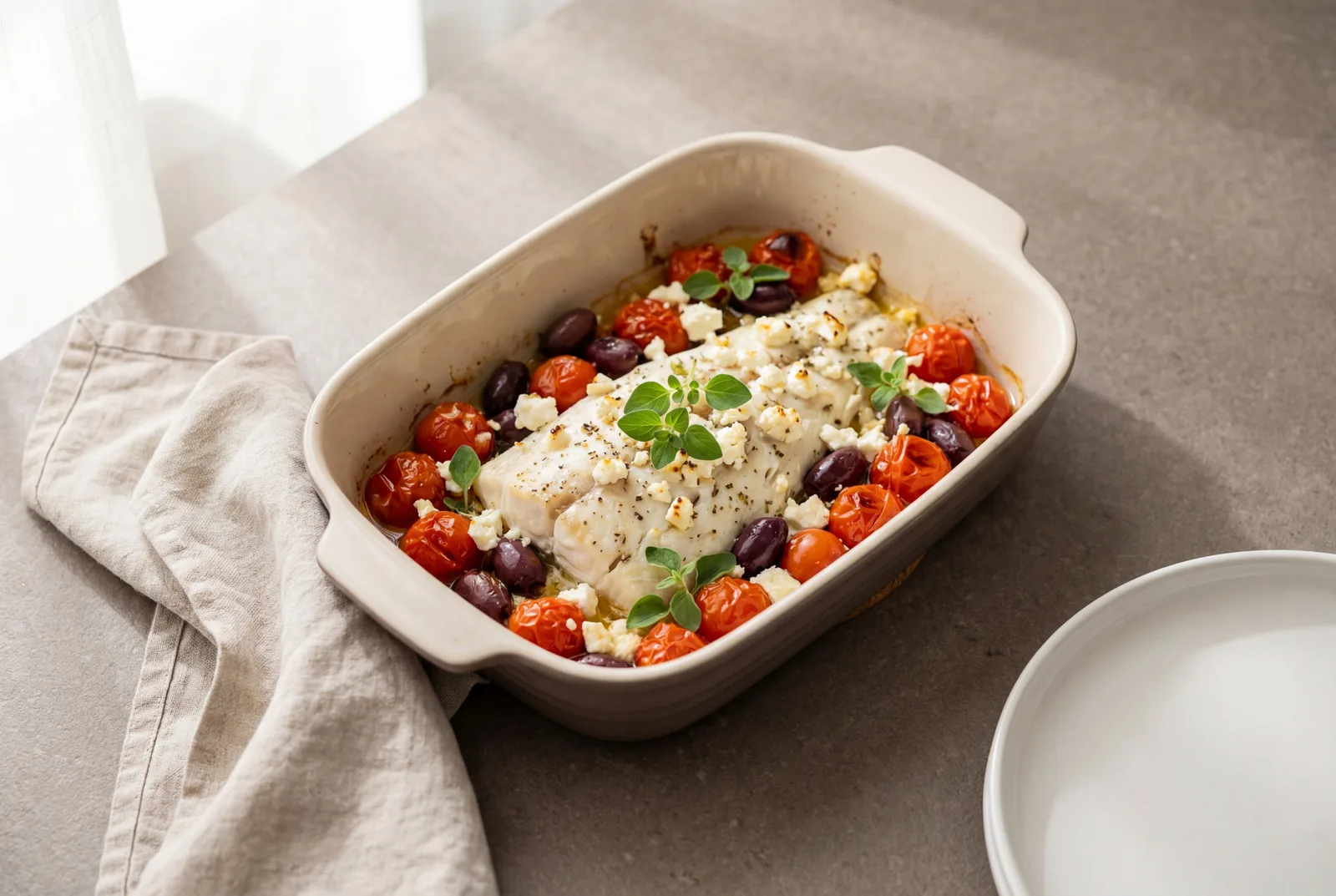
Greek Baked Fish with Lemon
Tender white fish fillets baked with fresh lemon, olive oil, and dried oregano until flaky and mild. At 0g fiber per serving, this Mediterranean classic is one of the most easily digestible protein sources for active flares—no garlic, no onion, no inflammatory triggers.
Greek Baked Fish with Lemon
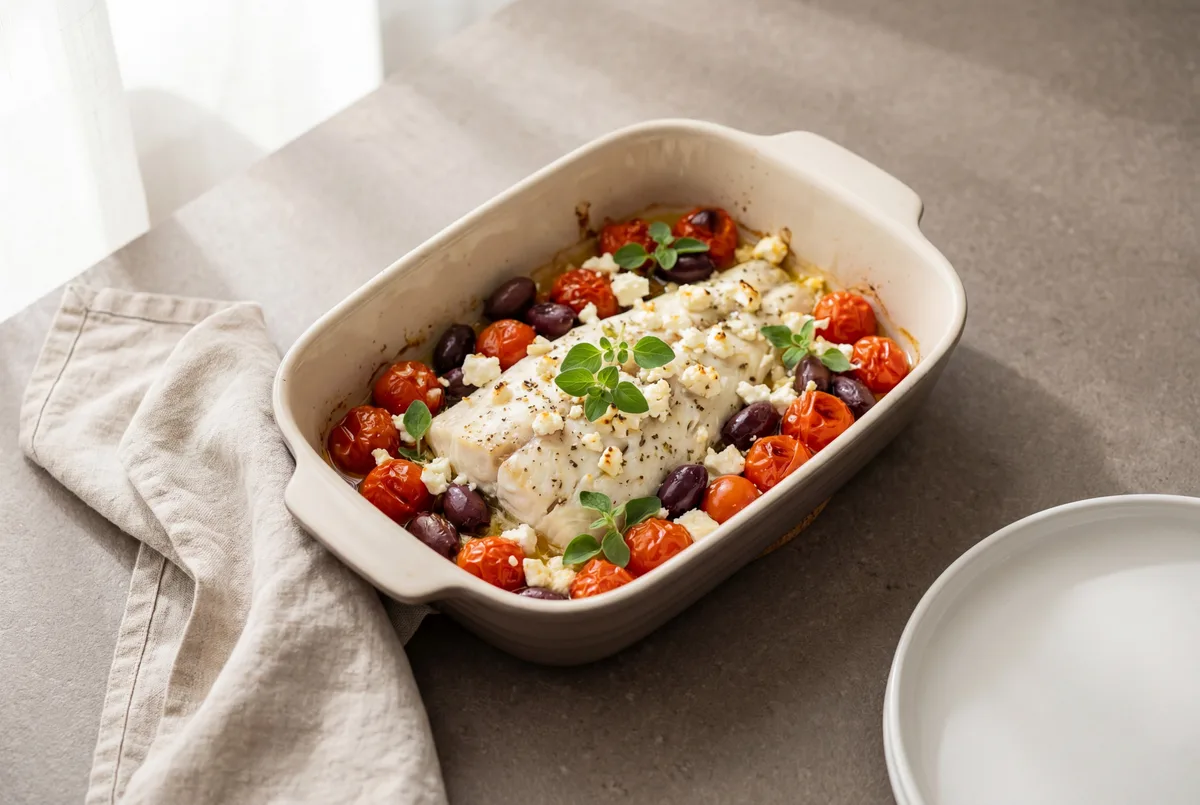
Tender white fish fillets baked with fresh lemon, olive oil, and dried oregano until flaky and mild. At 0g fiber per serving, this Mediterranean classic is one of the most easily digestible protein sources for active flares—no garlic, no onion, no inflammatory triggers.
Ingredients
- Low FODMAP
- Low FODMAP
- Low FODMAP
- Low FODMAP
- Low FODMAP
- Low FODMAP
- Low FODMAP
- Low FODMAP
Instructions
Preheat the oven to 400°F (200°C).
400°F (200°C)Equipment: baking dish, ovenPat fish fillets completely dry with paper towels—this helps them cook evenly and prevents steaming.
Equipment: paper towelsTip: Dry fish is key for even cooking and prevents steamingPlace fish in a small baking dish or oven-safe skillet, arranging fillets so they don't overlap.
Equipment: baking dishDrizzle 2 tablespoons olive oil and 2 tablespoons lemon juice evenly over both fillets.
Season with oregano, salt, and pepper (if using), distributing spices evenly across the surface.
Arrange lemon slices over and around the fish—about 3-4 slices per fillet for gentle citrus flavor.
Tip: 3-4 lemon slices per fillet provides gentle citrus flavorBake uncovered for 15-20 minutes, until the fish flakes easily when pressed gently with a fork and the thickest part is opaque throughout. Internal temperature should reach 145°F (63°C).
145°F (63°C)Tip: Fish is done when it flakes easily with gentle pressure and the thickest part is opaqueRemove from oven and let rest for 2 minutes to allow juices to redistribute.
Drizzle with remaining 1 tablespoon olive oil, garnish with fresh chopped parsley, and serve immediately with additional lemon wedges on the side.
Notes
Storage
Refrigerate leftovers in an airtight container for up to 2 days. Fish is best enjoyed fresh, but leftovers can be gently reheated in a 300°F (150°C) oven for 8-10 minutes. Avoid microwaving, which makes fish rubbery.
Fish selection
Cod, halibut, sea bass, and branzino all work beautifully. Choose fillets about 1 inch thick for even cooking. Avoid oily fish like salmon or mackerel during active flares—their higher fat content can be harder to digest for some of us.
Lemon sensitivity
If citrus bothers you during flares or if you have mouth sores, reduce lemon juice to 1 tablespoon and remove the lemon slices before serving. The fish will still have plenty of flavor from the herbs and olive oil.
Serving suggestions
Pair with fluffy white rice (not SCD-compliant), well-mashed potatoes, or steamed and peeled zucchini for a complete, flare-safe meal. For SCD, serve with butternut squash puree or well-cooked carrots.
Scaling
Recipe doubles easily. Use a larger baking dish and ensure fillets don't overlap, or cooking time will increase by 3-5 minutes.
IBD Considerations
Diet Protocol Compliance
How this recipe fits common IBD dietary approaches