Homemade Electrolyte Drink
A simple electrolyte drink based on WHO oral rehydration principles. Clear, lightly sweet, and balanced with sodium and potassium to replace what diarrhea takes away—no artificial colors or sugar alcohols.
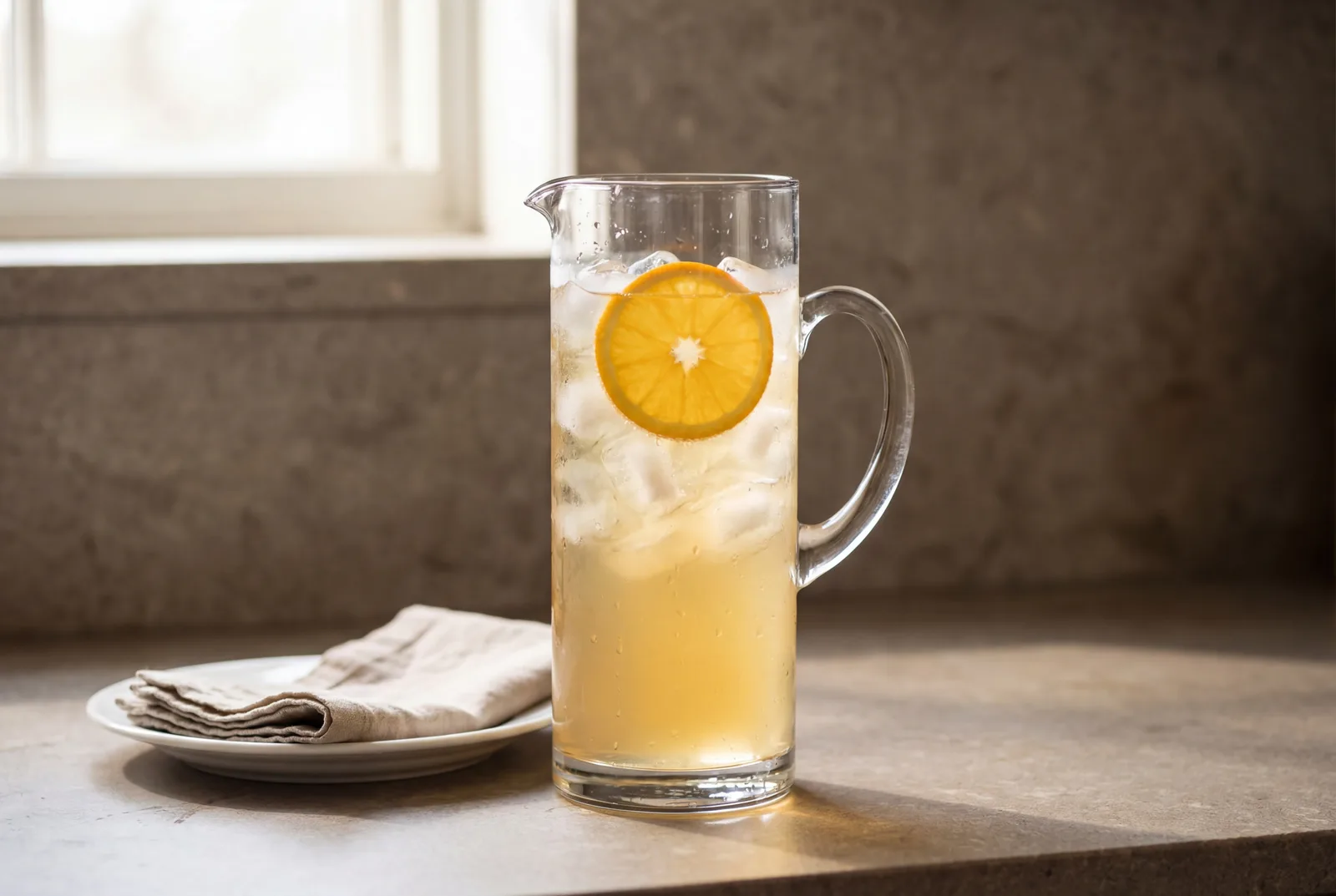
Homemade Electrolyte Drink
A simple electrolyte drink based on WHO oral rehydration principles. Clear, lightly sweet, and balanced with sodium and potassium to replace what diarrhea takes away—no artificial colors or sugar alcohols.
Ingredients
- Low FODMAP
- Low FODMAP
- High FODMAP
- Low FODMAP
- Low FODMAP
Instructions
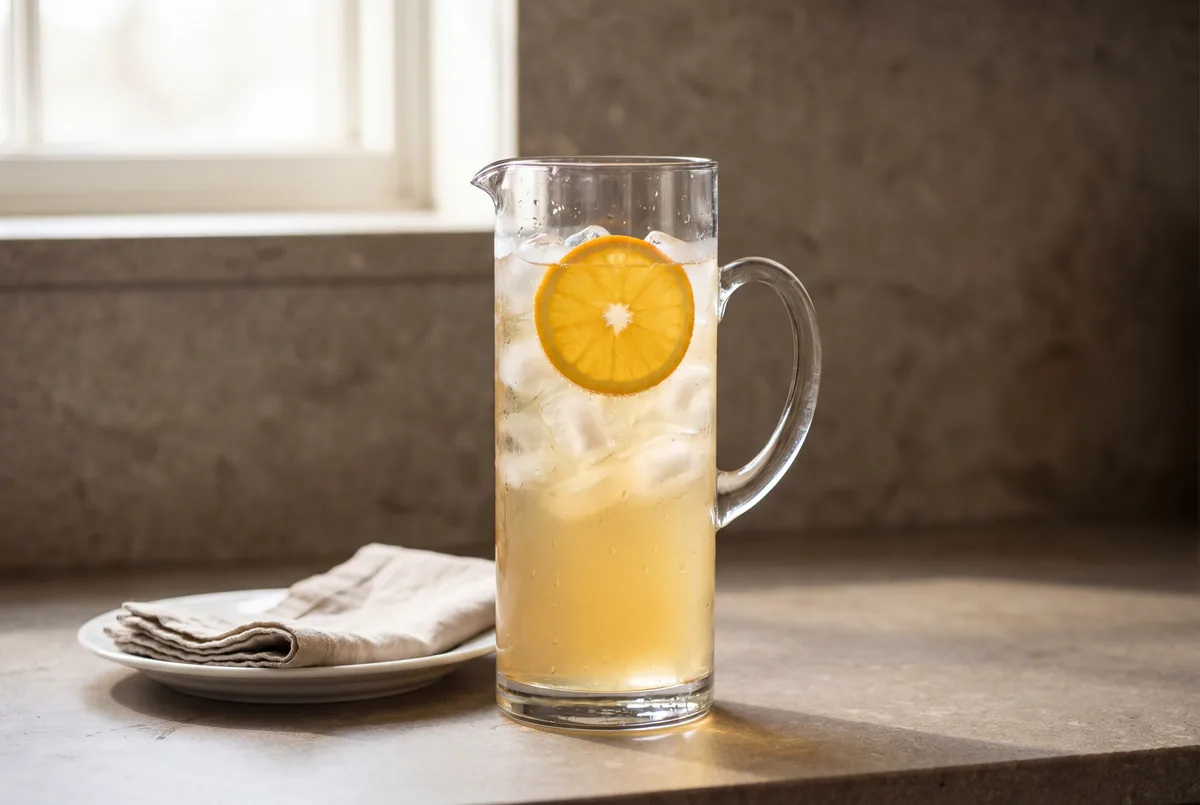
Pour 4 cups of water into a large pitcher.
Equipment: large pitcher, measuring cupsIf using orange juice, squeeze fresh oranges through a fine-mesh strainer into a small bowl, pressing to extract all liquid while catching the pulp. Discard pulp.
Equipment: fine-mesh strainer, small bowlTip: Straining removes pulp that may be harder to digest during active symptomsAdd the strained orange juice (if using), honey (or maple syrup), and salt to the pitcher.
Add the baking soda if using—this adds sodium bicarbonate for improved electrolyte balance.
Stir vigorously with a long spoon for 30-45 seconds, until the honey dissolves completely and the liquid is clear with no visible streaks.
Tip: The sweetener must dissolve completely for proper electrolyte distributionTaste and adjust sweetness if needed—the drink should taste lightly sweet, not sugary. If it tastes too salty, add a bit more sweetener.
Refrigerate for at least 1 hour before serving, until well chilled.
Shake or stir before each serving, as salt and other ingredients may settle at the bottom.
Tip: Ingredients naturally separate—this is normal
Notes
The science
This recipe follows WHO oral rehydration principles: water provides hydration, glucose (from honey or maple syrup) helps your intestines absorb sodium and water through sodium-glucose co-transport, salt replaces lost sodium, and orange juice provides potassium. The combination may be more effective than plain water for rehydration during active symptoms.
FODMAP vs SCD choice
You cannot make this recipe both low-FODMAP AND SCD-compliant with a single sweetener. Choose based on your needs: honey for SCD (but high-FODMAP), or maple syrup for low-FODMAP (but SCD-illegal). Both provide the glucose needed for sodium-glucose co-transport.
Skip the citrus
If orange juice triggers acid reflux, mouth sores, or worsens diarrhea, omit it entirely. You'll lose potassium but still get effective hydration. Alternatively, try a small splash of low-FODMAP grape juice (not from concentrate).
Commercial alternatives
If you prefer commercial options, look for electrolyte drinks without artificial ingredients or sugar alcohols (sorbitol, xylitol, mannitol). Pedialyte, DripDrop, and Liquid IV are commonly recommended—check labels carefully for high-FODMAP ingredients.
Storage
Refrigerate in a sealed pitcher for up to 3-4 days. Shake well before each serving as ingredients naturally separate.
IBD Considerations
Diet Protocol Compliance
How this recipe fits common IBD dietary approaches