Coconut Curry Shrimp
Tender shrimp in fragrant coconut curry sauce with ginger and mild spices. Each serving delivers anti-inflammatory ginger compounds and easily-digestible protein—ready in 25 minutes for a remission-friendly dinner.
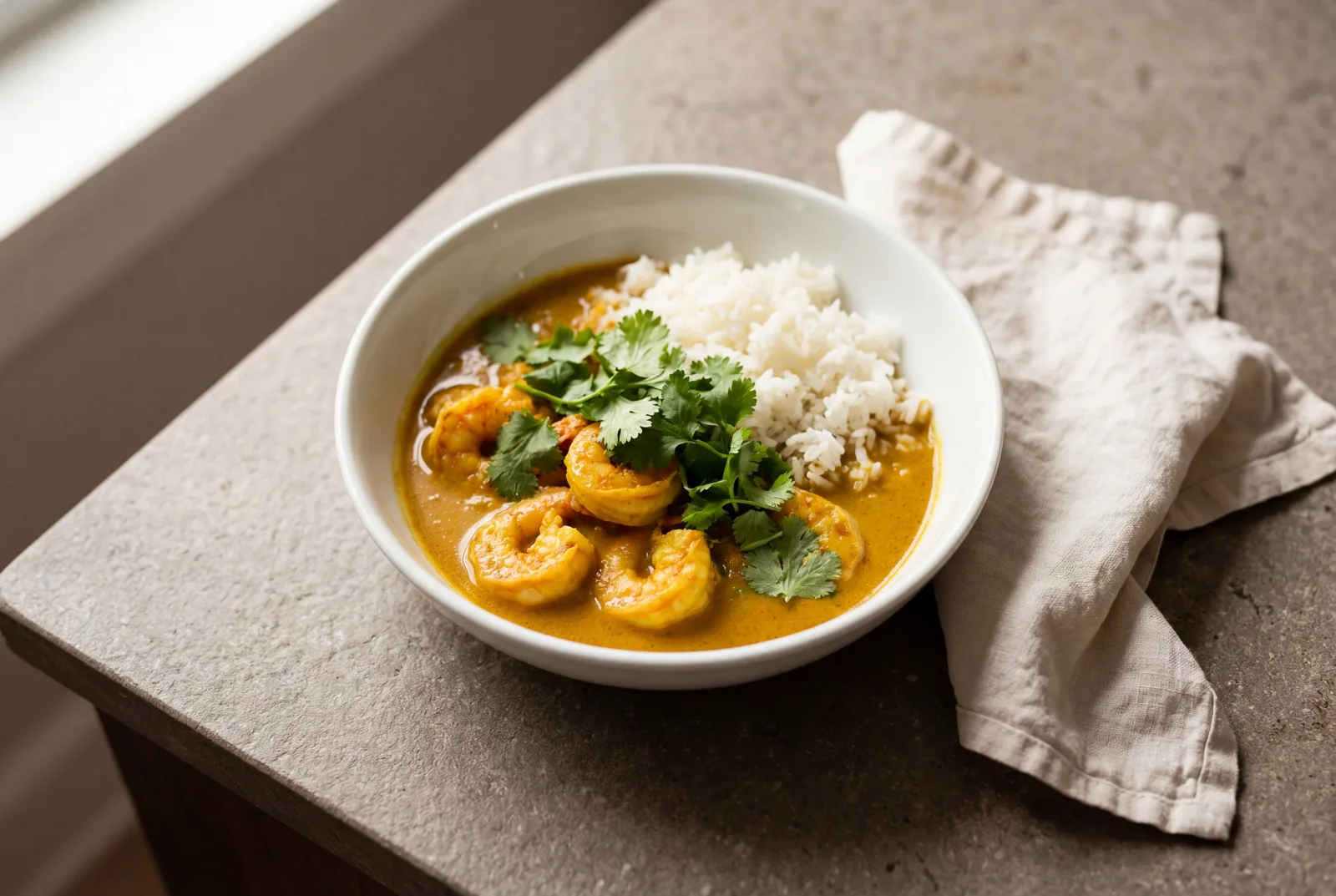
Coconut Curry Shrimp
Tender shrimp in fragrant coconut curry sauce with ginger and mild spices. Each serving delivers anti-inflammatory ginger compounds and easily-digestible protein—ready in 25 minutes for a remission-friendly dinner.
Ingredients
- Low FODMAP
- Low FODMAP
- Low FODMAP
- Moderate FODMAP
- Low FODMAP
- Low FODMAP
- Low FODMAP
- Low FODMAP
- Low FODMAP
- Low FODMAP
- Low FODMAP
Instructions
Heat the garlic-infused coconut oil in a large skillet over medium-high heat until shimmering.
Equipment: large skilletTip: The oil should shimmer but not smokeAdd the curry powder and minced ginger. Cook for about 1 minute, stirring constantly, until fragrant and the curry powder darkens slightly.
Tip: Blooming spices in oil releases their aromatic compoundsIf using bell pepper, add it now and cook for 2-3 minutes, stirring occasionally, until it begins to soften.
Add the shrimp in a single layer. Cook undisturbed for 2 minutes until the bottoms turn pink and opaque.
Tip: Don't move the shrimp—let them develop color on one side firstFlip each shrimp and cook for another 2 minutes until fully pink and just cooked through.
Pour in the coconut milk, fish sauce, lime juice, and maple syrup. Stir gently to combine and bring to a gentle simmer.
Simmer for 5-7 minutes, stirring occasionally, until the sauce reduces slightly and coats the back of a spoon.
Tip: The sauce is ready when it coats the back of a spoonTaste and adjust seasonings—add more lime juice for brightness or a pinch of salt if needed.
Remove from heat and garnish with fresh cilantro.
Serve immediately over warm jasmine rice.
Notes
Storage
Refrigerate in an airtight container for up to 2 days. Store shrimp and rice separately for best texture. Reheat gently on the stovetop over low heat, adding a splash of water or coconut milk to loosen the sauce.
Low-FODMAP curry powder
Most commercial curry powders contain garlic and onion powder. Look for FODMAP-friendly brands or make your own blend with turmeric, cumin, coriander, ginger, cinnamon, and white pepper.
Coconut milk portions
Per Monash University guidelines, full-fat canned coconut milk is low-FODMAP up to 1/2 cup (120g) per serving. This recipe uses about 100g per serving, staying within safe limits. Avoid coconut milk with added inulin.
Fish sauce substitution
Fish sauce adds umami depth, but skip if fermented ingredients bother you. Replace with an extra pinch of salt and a squeeze of lime.
SCD alternative
Jasmine rice and maple syrup are not permitted on SCD. Substitute rice with cauliflower rice and maple syrup with honey for an SCD-legal version.
Don't overcook shrimp
Shrimp cook quickly and become rubbery when overdone. They're ready when they turn pink and opaque—about 4 minutes total.
IBD Considerations
Diet Protocol Compliance
How this recipe fits common IBD dietary approaches