Chicken Parmesan
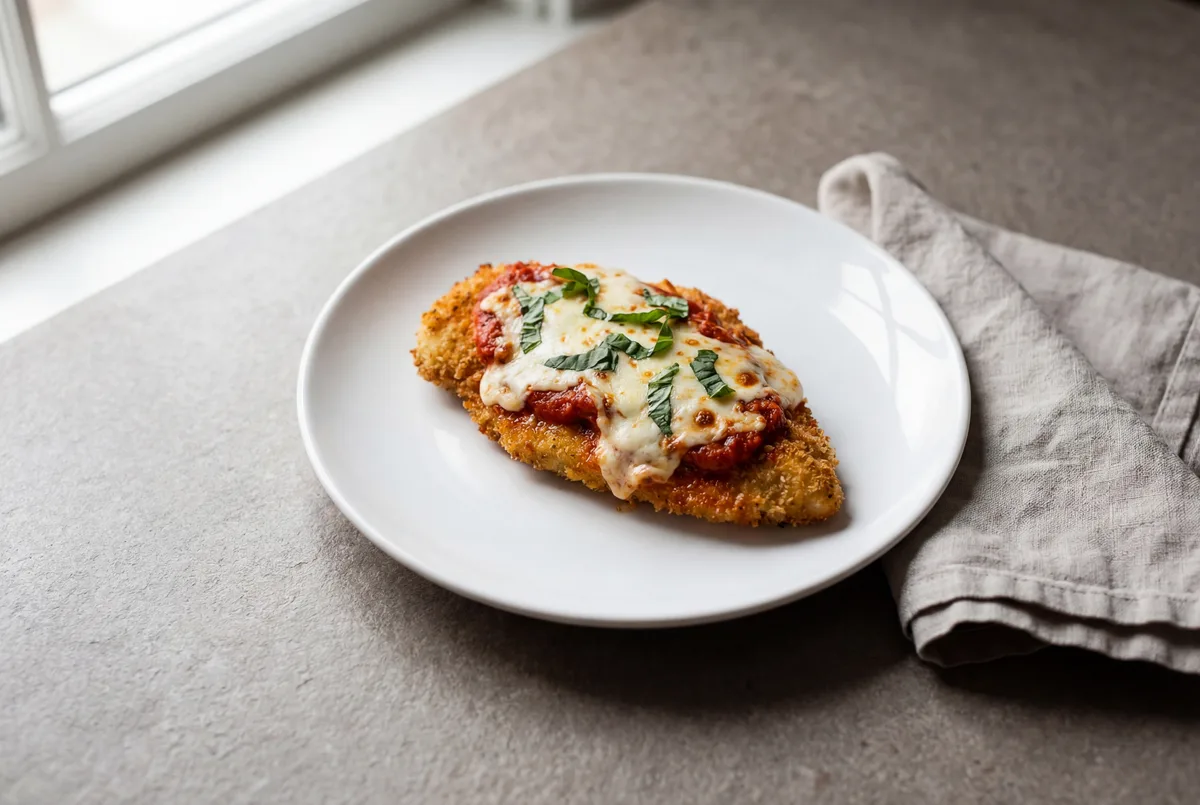
Crispy breaded chicken topped with marinara and melted mozzarella—classic Italian-American comfort that works for many of us when in remission. Each serving delivers 42g of lean protein to support gut healing. Bake instead of fry for a gentler option.
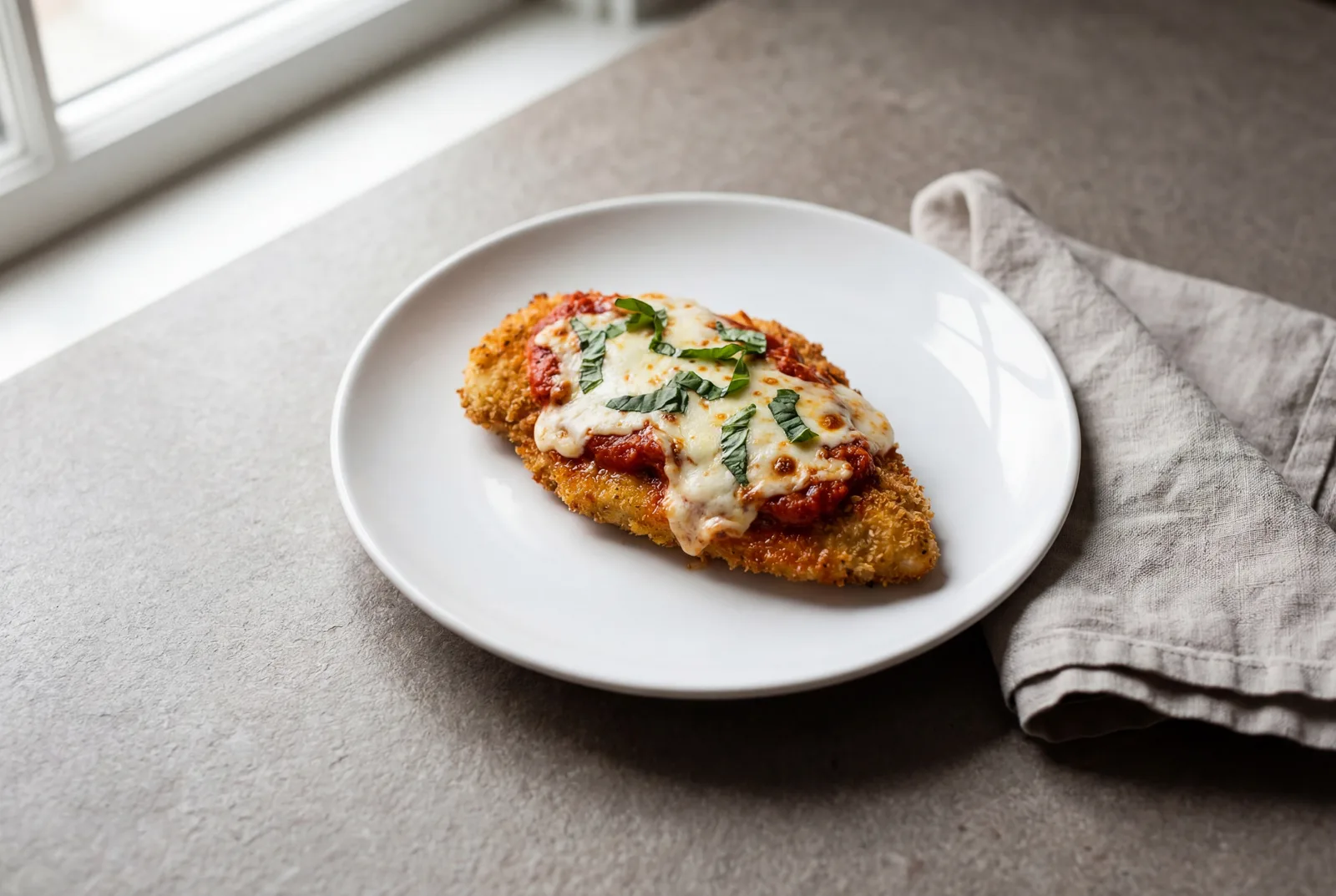
Chicken Parmesan
Crispy breaded chicken topped with marinara and melted mozzarella—classic Italian-American comfort that works for many of us when in remission. Each serving delivers 42g of lean protein to support gut healing. Bake instead of fry for a gentler option.
Ingredients
- Low FODMAP
- High FODMAP
- Low FODMAP
- High FODMAP
- Low FODMAP
- Low FODMAP
- Low FODMAP
- Low FODMAP
- High FODMAP
- Low FODMAP
- Low FODMAP
Chicken
Topping
Instructions
Preheat oven to 400°F (200°C).
400°F (200°C)Equipment: ovenPlace chicken breasts between two sheets of plastic wrap and pound with a meat mallet or rolling pin to an even 1/2-inch thickness throughout.
Equipment: plastic wrap, meat mallet or rolling pinTip: Even thickness ensures even cooking—no dry edges or raw centersSet up your breading station with three shallow dishes: flour in the first, beaten eggs in the second, and breadcrumbs mixed with Parmesan, salt, and pepper in the third.
Equipment: 3 shallow dishes or platesDredge each chicken breast in flour, shaking off excess, then dip in egg until fully coated, then press into breadcrumb mixture, coating both sides thoroughly.
Tip: Shake off excess at each stage for a coating that adheres well and crisps evenlyHeat olive oil in a large oven-safe skillet over medium-high heat until it shimmers.
Equipment: large oven-safe skilletTip: The oil should shimmer but not smoke—if it smokes, it's too hotAdd chicken and fry for 3-4 minutes per side, until the coating turns golden brown and crispy. Work in batches if needed to avoid crowding.
Spoon about 1/4 cup (60ml) marinara sauce over each cutlet while still in the skillet.
Sprinkle shredded mozzarella evenly over each chicken breast.
Transfer the skillet to the preheated oven.
Equipment: oven mittsBake for 10-15 minutes, until the cheese is melted, bubbly, and beginning to brown at the edges. Internal temperature of chicken should reach 165°F (74°C).
400°F (200°C)Tip: The cheese should be bubbly with golden-brown spots at the edgesRemove from oven and let rest for 2-3 minutes before serving.
Garnish with torn fresh basil leaves. Serve with white rice, mashed potatoes (no skins), or spaghetti squash if you tolerate the fiber well.
Notes
Storage
Refrigerate leftovers in an airtight container for up to 3 days. Store chicken separate from any side dishes for best texture. Reheat in a 350°F (175°C) oven for 10-12 minutes to restore crispiness—microwaving will make the coating soggy.
Baked method (lower fat)
For a gentler, lower-fat version: skip the pan-frying entirely. Place breaded chicken on a parchment-lined baking sheet, drizzle lightly with olive oil, and bake at 425°F (220°C) for 20-25 minutes until golden and cooked through. Add sauce and cheese, then bake 5 more minutes. This reduces fat content significantly while maintaining good texture.
Gluten-free adaptation
Use gluten-free all-purpose flour and gluten-free panko breadcrumbs (rice-based works well). This makes the dish suitable for those with celiac disease or gluten sensitivity and converts the FODMAP status of the breading from red to green.
Low-FODMAP marinara
Choose marinara sauce labeled garlic-free and onion-free (Fody Foods, Casa Sanremo), or make your own with canned crushed tomatoes, olive oil, fresh basil, dried oregano, and salt. This eliminates the main FODMAP trigger.
Dairy modifications
For lactose sensitivity: use lactose-free mozzarella, or skip the mozzarella entirely and use only Parmesan (which has virtually no lactose due to aging). Hard, aged cheeses are generally much better tolerated than fresh mozzarella.
Make-ahead
Bread the chicken up to 4 hours ahead and refrigerate on a plate. This actually helps the coating adhere better during cooking. The marinara sauce can be prepared days in advance.
IBD Considerations
Diet Protocol Compliance
How this recipe fits common IBD dietary approaches