Classic Parmesan Risotto
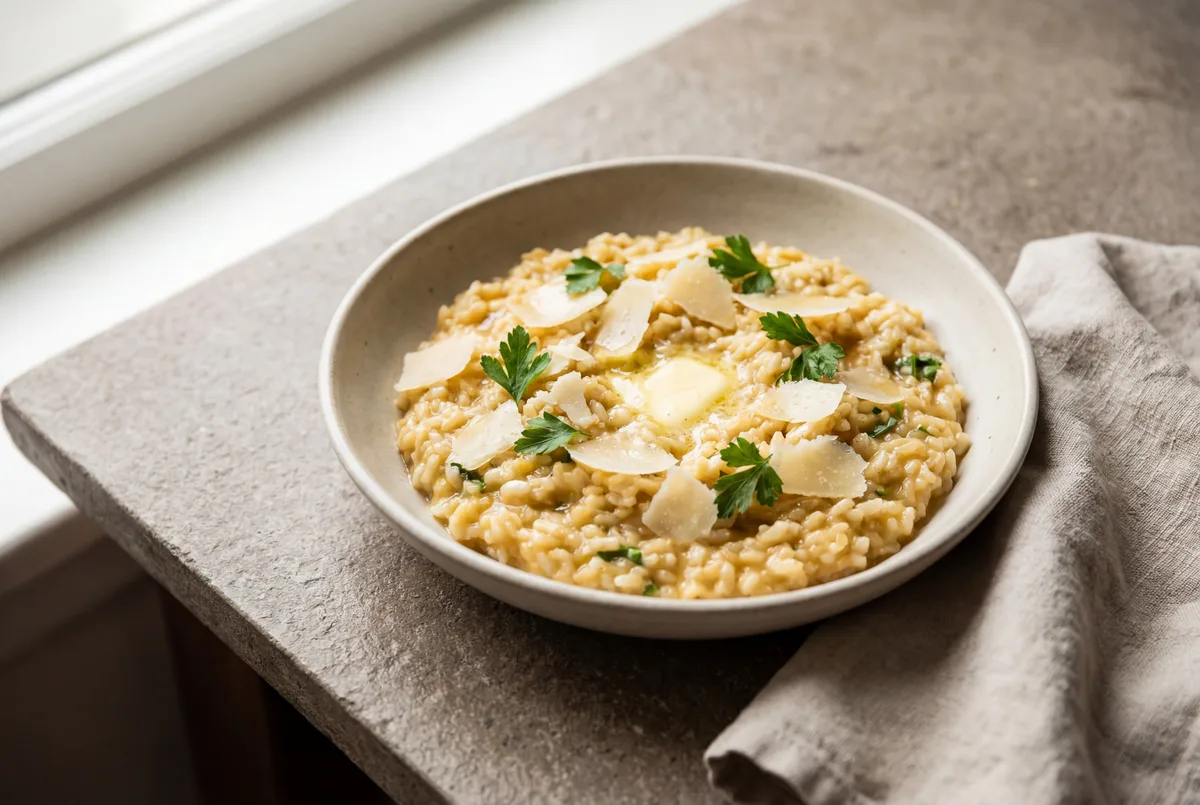
Silky risotto made with Arborio rice and aged Parmesan. Slow stirring releases starch for a creamy texture—no cream needed, just patience and 30 minutes at the stove.
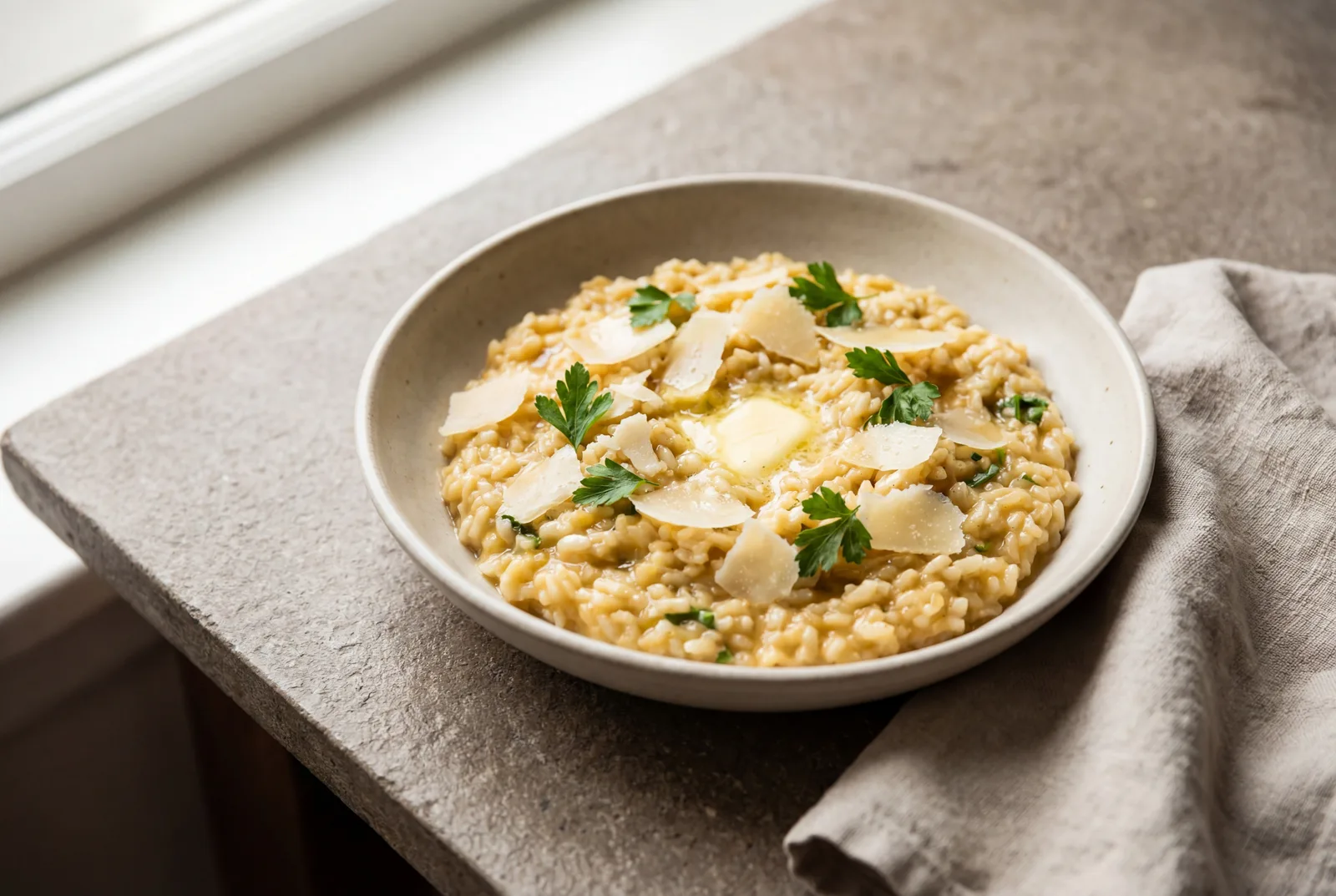
Classic Parmesan Risotto
Silky risotto made with Arborio rice and aged Parmesan. Slow stirring releases starch for a creamy texture—no cream needed, just patience and 30 minutes at the stove.
Ingredients
- Low FODMAP
- Low FODMAP
- Low FODMAP
- Low FODMAP
- Low FODMAP
- Low FODMAP
- Low FODMAP
- Low FODMAP
- Low FODMAP
Instructions
Keep broth warm in a saucepan over low heat. You'll be adding it ladle by ladle—cold broth shocks the rice and slows cooking.
Equipment: small saucepanHeat garlic-infused oil in a large, heavy-bottomed pan over medium heat.
Equipment: large heavy-bottomed pan, wooden spoonAdd Arborio rice and stir constantly for 2 minutes until the edges become translucent and the rice smells slightly nutty. This toasting step is essential—it helps each grain absorb liquid while staying distinct.
If using wine, add it now and stir until fully absorbed. The alcohol will cook off quickly. Skip this step if omitting wine.
Add one ladle of warm broth to the rice. Stir frequently until the liquid is almost fully absorbed before adding more.
Continue adding broth one ladle at a time, stirring and waiting for absorption between additions. This takes about 18-20 minutes total. The rice is ready when it's creamy but still has a slight bite in the center (al dente).
Tip: The stirring releases starch from the rice—this creates the creaminess without creamRemove pan from heat immediately once rice reaches al dente.
Stir in Parmesan, butter, salt, and pepper. The residual heat will melt everything into the rice. The risotto should be loose enough to flow slowly when you tilt the pan—this is called all'onda (like a wave).
Let rest 2 minutes before serving. This allows the starches to settle and the flavors to meld.
Garnish with parsley and extra Parmesan if desired. Serve immediately—risotto waits for no one.
Notes
Why stirring matters
Stirring releases starch from the Arborio rice, creating creaminess without adding cream. It's the defining technique of risotto. Skip it and you'll get sticky rice instead.
Rice type
Arborio is essential. Regular long-grain rice lacks the starch content to become creamy. Carnaroli and Vialone Nano also work if you can find them.
No onion needed
Traditional risotto starts with sautéed onion—a high-FODMAP ingredient. We use garlic-infused oil instead, which delivers flavor without the fructans.
Wine substitution
Wine adds depth but isn't essential. Replace with a splash of lemon juice or simply use extra broth. Some of us find alcohol irritating even after cooking.
Consistency check
Finished risotto should be loose and flow slowly when you tilt the pan. If it's stiff or gluey, add a splash more warm broth and stir gently.
Storage
Refrigerate in an airtight container for up to 3 days. Risotto thickens as it cools—add a splash of broth when reheating to restore creaminess. Best eaten fresh.
Dairy-free option
Replace butter with olive oil and Parmesan with 3 tablespoons nutritional yeast for a vegan version. It's different, but still satisfying.
IBD Considerations
Diet Protocol Compliance
How this recipe fits common IBD dietary approaches